What impact does the U.S.-Iran war have on CMU?

Since the United States-Iran war began a week ago, it has not impacted anything from an admission or international student visa perspective at Central Michigan University, according to Aaron Mills, the university’s spokesperson.
“For the most part, the conflict in Iran itself hasn't changed anything from the university standpoint,” Mills said. “Our goal at this point, with this conflict and others that we've seen throughout the world in recent years, is just to make sure that we're here for our students, knowing that they're away from home.”
The U.S. government issued a “Level 4 – Do not travel” advisory to Iran and several other countries in the Middle East.
Mills said CMU doesn’t send students to countries with Level 3 or 4 travel advisories in place.
“CMU will continue to keep a close eye on the situation in the Middle East as to whether it may impact study abroad programs in other countries in the future,” he wrote in an email to Central Michigan Life. “Any decisions to alter our study abroad programs will be made in tandem with guidance from the State Department, insurance carrier and leadership at the university.”
As of March 6, the war affected 17 countries in some way, according to the Associated Press. Some are directly involved, such as Iran and Israel, and others sustained damage, such as the United Arab Emirates and Qatar.
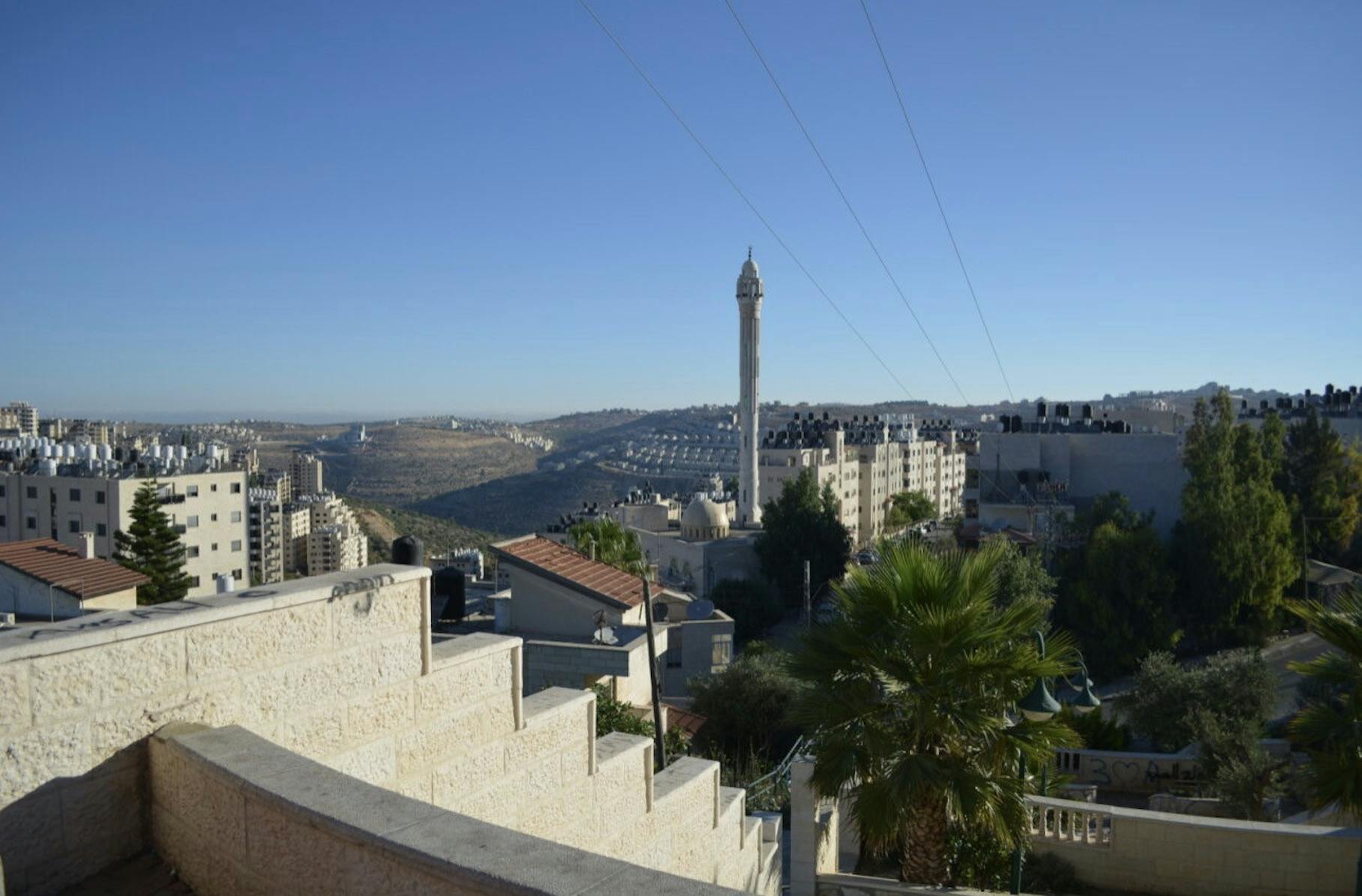
As these events unfold in the Middle East, CMU student Lena Kandah, who is of Palestinian and Jordanian heritage, said the region is often misrepresented.
“When people think about the Middle East, I think they think about constant war, terror, just a terrible, awful region of the world,” she said. “Not only is it not all like that, it definitely has not always been like that.
“I used to spend my summers in the West Bank in Palestine. … I think Palestine is gorgeous. I think it's beautiful.”
Kandah said students who have families in the Middle Eastern countries affected by the war are terrified.
“I've met students who still have family … in these countries, and they feel scared,” she said. “I don't speak for all of them, but I think some of them feel watched. … Students who come from these countries might feel like, ‘Oh, my god, people are talking about my country. What do people think about me?’”
CMU has seven international students from Iran, Mills wrote.
To support students’ mental health, the university offers the Counseling Center services. Students can request an appointment on CMU’s website.
The Office of International Affairs and Graduate Recruitment is responsible for providing international students with information to navigate life in the U.S. and to help them feel a sense of belonging, Mills said.
What’s going on in Iran?
The U.S. struck Iran on Feb. 28, as President Donald Trump said the objectives are to destroy Iran’s naval and missile capabilities and stop it from getting a nuclear weapon, the AP reported. Iran retaliated, firing back at neighboring countries and Israel.
That day, in a joint operation, the U.S. and Israel killed Ali Khamenei and 40 other senior figures, according to the AP. Khamenei was the supreme leader of Iran and was often called a "dictator" by the protestors. Protests began in Iran in December 2025, advocating for human rights and the end of the Islamic Republic system, according to Amnesty International. The Iranian government cracked down on the protests, killing over 7,000 people, PBS reported.
In missile strikes, an Iranian elementary school was hit, with more than 165 people killed. Some allege it was a U.S. strike, the AP reported.
Another important moment in the war was a drone strike Monday in Kuwait that killed six U.S. soldiers.
Here's what's been happening in the last few days:
- On March 2, Trump said the operation in Iran could last four to five weeks, but the U.S. has the capability to go longer as well.
- As of March 3, Reuters reported that Iran has not yet contacted the U.S. regarding peace talks.
- Trump said on March 5 that he should be involved in choosing the next supreme leader in Iran. The same day, the U.S. sank an Iranian warship.
- On March 6, AP sources said Russia shared intelligence with Iran about U.S. targets in the region.
Historical background
The U.S.-Iran relationship hasn’t always been hostile. In fact, they’ve been allies for decades, said Talat Halman, a CMU religion professor.
In 1951, the Iranian people democratically elected Mohammad Mosaddegh, Halman said. Mosaddegh wanted to nationalize the Iranian oil, but it was controlled by the British and Americans at that time.
“The U.S. and (Britain) didn't like it, so they installed the Shah (Mohammad Reza Pahlavi) in his place,” Halman said. “From 1953 until 1979, the U.S. and Iran were tight like this, work closely together. In fact, Iran's Secret Service trained under the Israeli Secret Service, and we funded Iran with money, and we were great friends with Iran.”
At the same time, Imam Ayatollah Khomeini, who rejected Western influence, was gaining popularity, Halman said. In 1963, Shah exiled Khomeini to Iraq and later to France.
“In France, Ayatollah Khomeini was able to record sermons on cassette tapes, and then they would broadcast the sermons over the telephone lines,” Halman said. “Khomeini had a much better position being in France than he had when he was in Iraq or in Iran. So, these Iranian people got tired of American involvement, right? They protested. There were myriad protests, massive protests in Iran.”
In 1979, the Iranian Revolution overthrew the Shah, and Khomeini came to power. After Khomeini’s death in 1989, Khamenei became the supreme leader of Iran, Halman said. That is who was killed in the current Iran war.
It's hard to say what to expect in the future from this war, Halman said.
"It's hard to predict what's going to happen," he said. "I'm sure that the United States will prevail."


