'There is no story of America without the story of Black people'

Marc Lamont Hill speaks to a crowd of Central Michigan Univeristy students, staff and community members as the keynote for Black History Month 2026 in the Bovee University Center Rotunda, on Wednesday, Feb. 11, 2026. Hill is an award-winning journalist, scholar and activist. (CM-Life | Cristin Coppess)
As debates over how history is taught continue across the country, one scholar challenged Central Michigan University students to see Black History Month as more than a celebration, but as a call to action.
Author, activist and TV personality Marc Lamont Hill spoke on Wednesday, Feb. 11, at the University Center Rotunda, where he addressed the significance of Black History Month amid growing efforts to restrict access to certain historical narratives. Hill framed the observance as both a time to honor Black achievements and a form of resistance against attempts to erase or limit Black history.
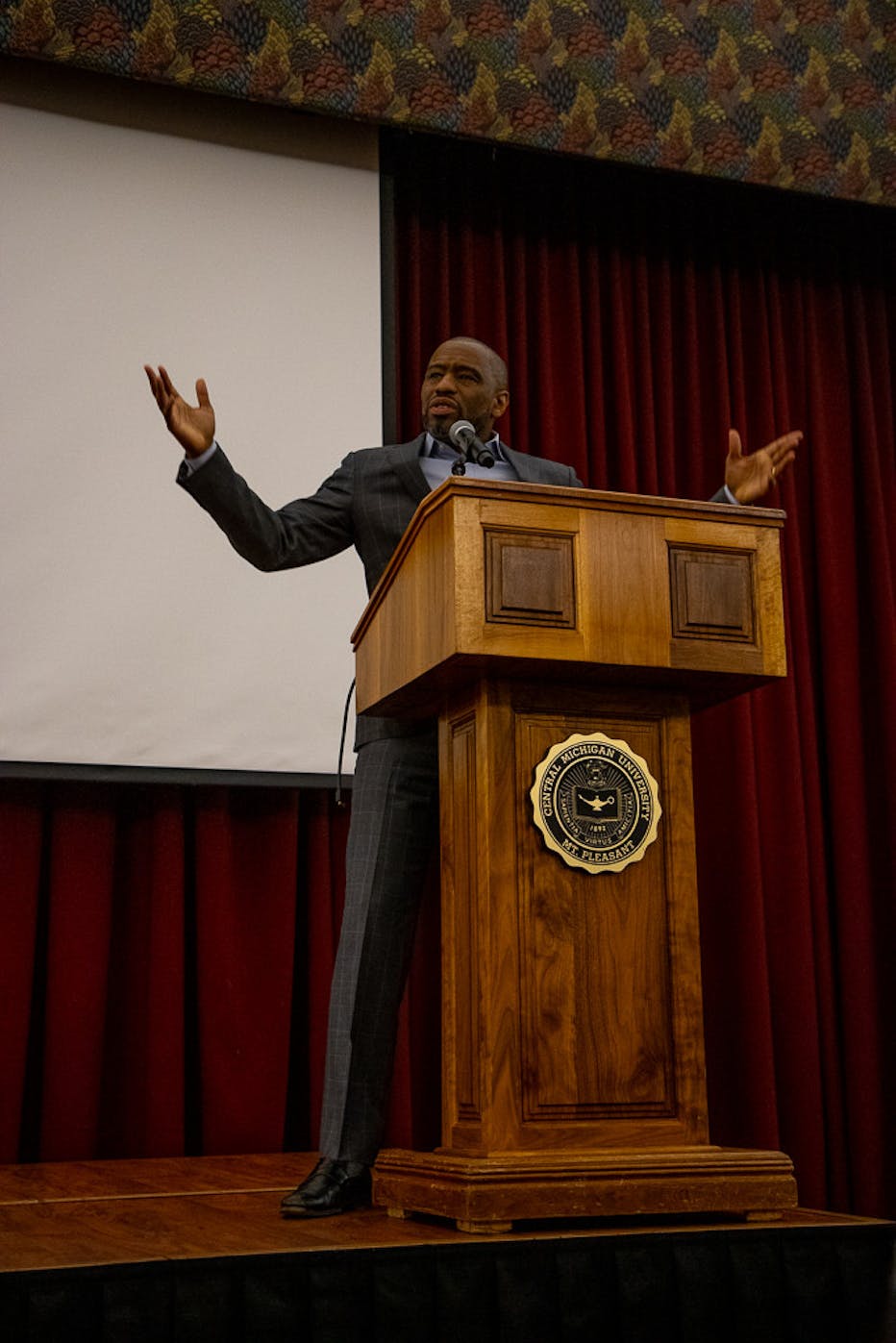
Keynote speaker for Black History Month 2026 Marc Lamont Hill delivers a speech in the Bovee University Center Rotunda, Wednesday, Feb. 11, 2026. The event was hosted by Central Michigan University's Multicultural Academic Student Services. (CM-Life | Cristin Coppess)


According to his website, Hill is an award-winning journalist, author and Presidential Professor of anthropology and urban education at the City University of New York Graduate Center. He hosts BET News, TheGrio and Al Jazeera’s UpFront, and holds a doctorate with distinction from the University of Pennsylvania.
“There is no story of America without the story of Black people,” Hill said. “It's important to understand that Black people are not defined by slavery. We are a people whose history was interrupted by slavery.”
Hill said Black History Month is about celebrating Black history and resisting, especially as some people try to limit what history gets taught.
“In 2026, we are at a time where people are trying to prevent us from learning history,” he said, referencing book bans and restrictions at schools across the country.
Throughout his speech, Hill returned to what he called the “radical imagination,” encouraging students to envision a future beyond current political and social restrictions.
“Long before Black people were free, we dreamed of freedom,” he said. “I want you to think about the wildest thing that could ever possibly happen, even though it may seem impossible.”
The event was hosted by the Multicultural Academic Student Services, the Organization of Black Leaders and the Leadership Institute.
The OBL is a registered student organization focused on empowering Black students and promoting community on campus. Kennedy Ray, the president of the OBL, said the goal of bringing Hill to campus was to inspire and educate.
“Having this event was mainly focused on empowering black students or black faculty, anywhere in the black community, and everyone on campus,” Ray said. “You learn something new. He’s been through a lot. Just experiencing blackness in America.”
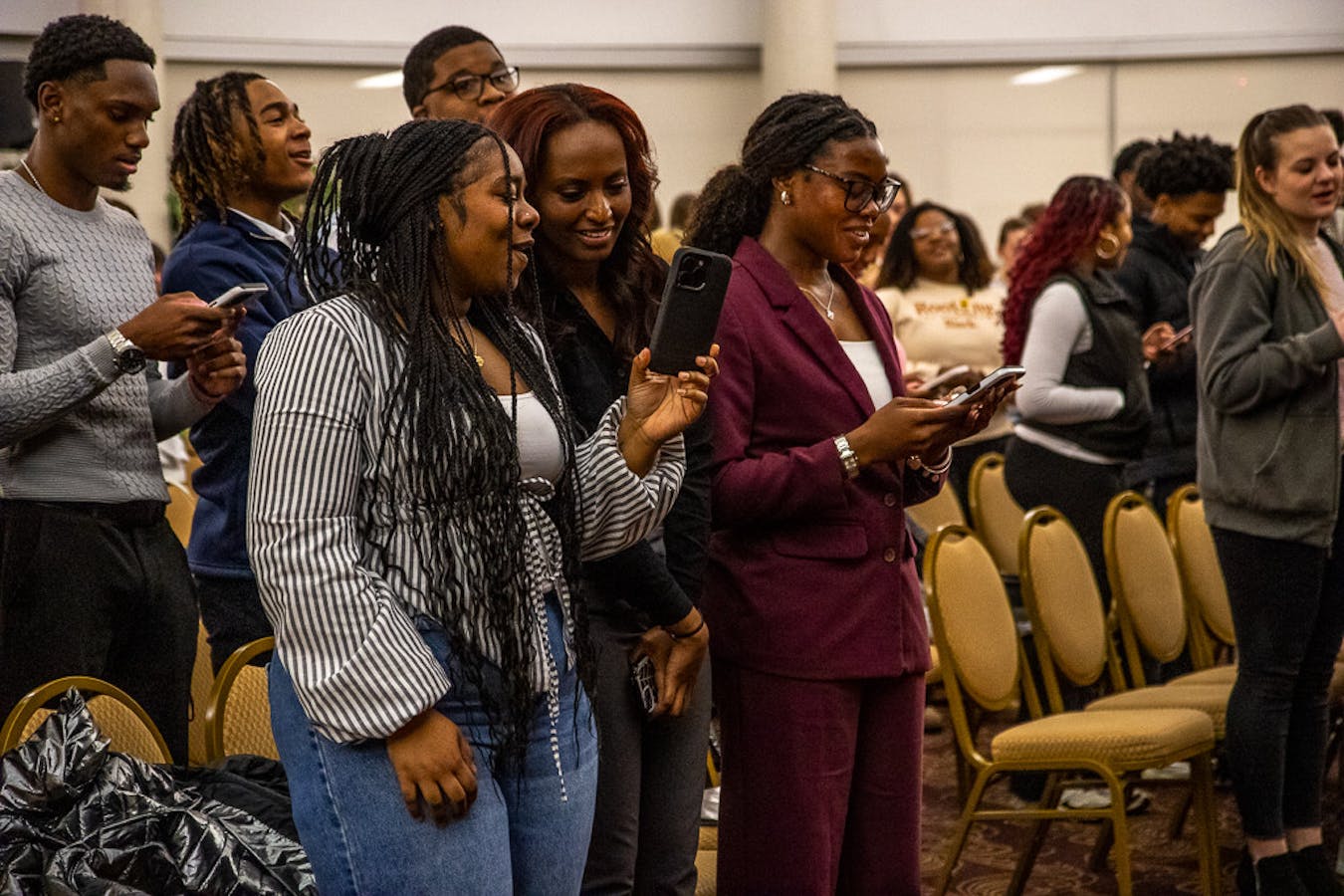
Central Michigan University students gather around shared cell-phone screens as they sing "Lift Every Voice and Sing" during the 2026 Black History Month keynote speaker event in the Bovee University Center Rotunda, Wednesday, Feb. 11, 2026. The song is often referred to as "The Black National Anthem." (CM-Life | Cristin Coppess)
Ray said Hill’s discussion of education in America stood out to her, specifically his comments about barriers that limit learning opportunities.
“I think what made me realize is when he talked about education in Black America and how it's limited because of white supremacy," she said. "A lot of people (are) trying to hold people of color back from learning."
Ray emphasized the importance of community, saying that learning about Black history requires being surrounded by others who are equally interested in discovering, revisiting and understanding it together.
Jayla Turner, a sophomore at CMU, said the university’s broader support of students of color makes the campus feel like home.
She said inviting Hill gives students a chance to hear new ideas.
“Our leadership here invest(s) in people like him to come, because yes, we have lots of phenomenal faculty and staff of color that we get to connect with ... but it’s so special to hear it from someone who’s traveled and been everywhere, someone who’s an author, to hear their perspective that they carry so we can continue to spread it,” she added.


