Neal: Finding my voice
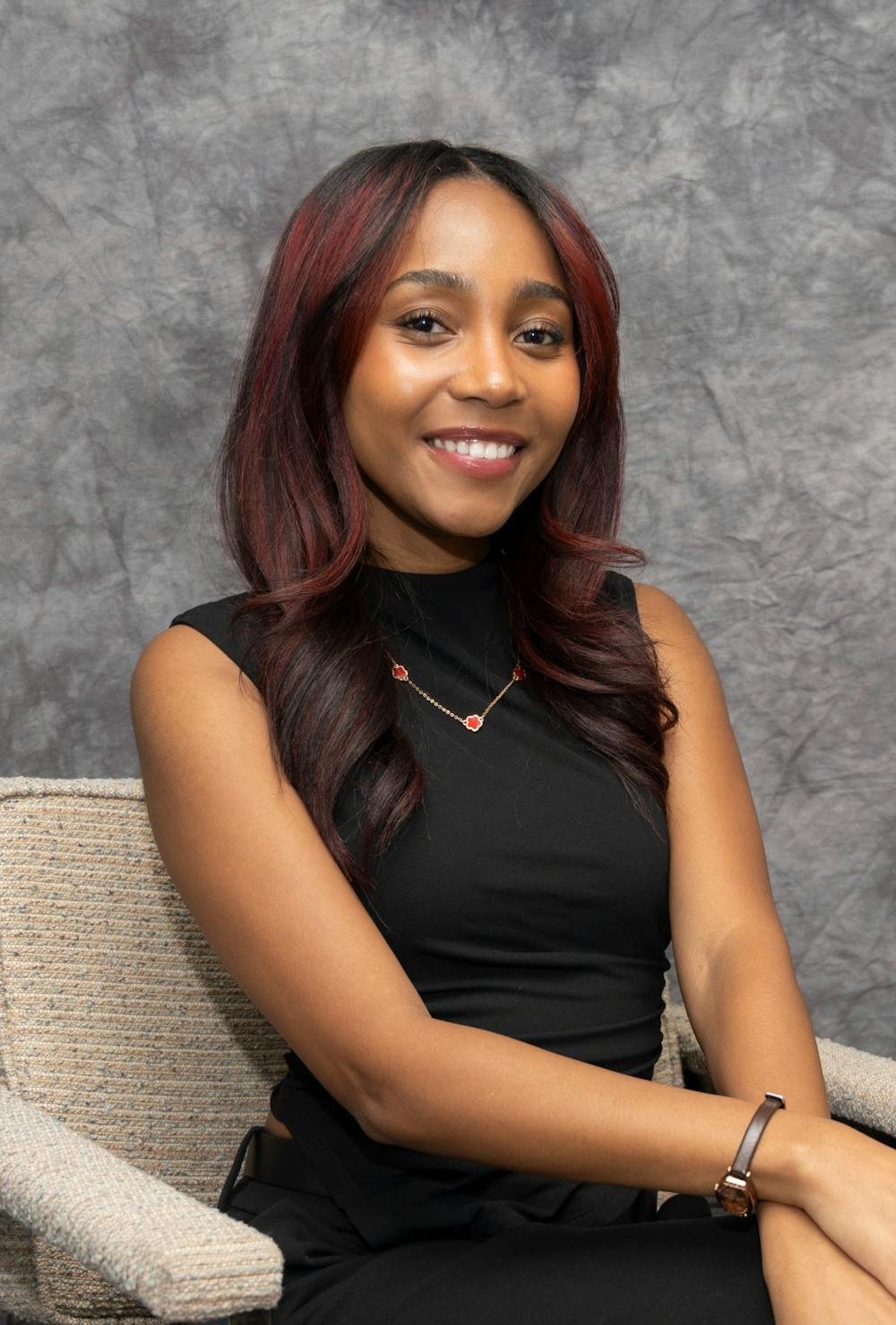
Sydney Neal poses for a photo in the CM Life office Thursday, Jan. 29, 2026.
For most of my life, finding my voice wasn’t about learning how to speak; it was about learning when it was safe to.
Growing up as a Black girl, I became fluent in observation long before I became confident in expression. I learned how to read rooms, read faces and read tone shifts. I learned when laughter meant comfort and when it meant dismissal. I learned that my words could carry weight, but that weight could feel threatening in spaces that weren’t built to hold it.
So, I adapted. I listened more than I spoke. I softened myself before anyone asked me to.
I grew up in Metro Detroit, surrounded by my mom, dad, younger sister and my dog (my ‘fur brother’ according to my mom) Alex in a home where hard work and resilience were non-negotiable. At home, my voice mattered. My opinions were encouraged. I was told to stand up for myself, to be confident, to know my worth. But once I stepped outside that space, I quickly learned that confidence looked different on me.

Photo of two-year-old Sydney Neal.
As I got older, I noticed how Black girls were often labeled more harshly and misunderstood more easily. Being outspoken was normal for some, but for me, things felt different. There were times when I felt like asking questions was seen as challenging authority. Expressing frustration could be misread as anger. Over time, I started to edit myself before anyone else could.
I didn’t stop having opinions; I just stopped sharing them.
That habit followed me into early adulthood. Whether it was in classrooms, extracurriculars or social settings, I carried an unspoken awareness of how my voice might be received. Working in predominantly white-male environments, there were many times I felt silenced because I didn’t want to come off in a certain light. Not because I doubted my intelligence, but because I had learned to anticipate judgment before dialogue.
Being a Black woman means learning early that your voice exists in a narrow margin. You are expected to speak, but not too loudly. To advocate, but not too strongly. To be confident but not commanding. Finding my voice meant confronting the fear of being labeled “too much” or “too aggressive” simply for being myself.
I began to understand that this experience wasn’t unique to me. Black women have always had voices; we have just lived in a world that has repeatedly tried to silence them. Historically, Black women have been organizers, writers, journalists, educators and leaders, even when their contributions went unrecognized. From Ida B. Wells using journalism to expose racial violence to modern Black women pushing for equity in media, our voices have always been rooted in truth.
Yet even with that legacy, silence can feel safer.
When I entered my career in journalism, I hoped things would be different. In some ways, they were. I was surrounded by people who valued ideas, discussion and storytelling. But I still encountered moments that reminded me how fragile inclusion can be. There were meetings where my ideas were overlooked, only to be affirmed when repeated by someone else. Spaces where diversity existed, but true inclusion felt conditional.
Those moments were discouraging, but they were also revealing.
They forced me to ask myself why my voice mattered to me in the first place. Was I speaking to be validated, or was I speaking because what I had to say was important? Was I shrinking to make others comfortable, or was I honoring the truth of my experiences?
The shift happened when I gained a platform. Having this platform made me realize that my voice carried something no one else’s could: my lived experience. As someone who has always put people before myself, I realized that my perspective as a Black woman is an asset. It also allows me to have a voice for other Black girls who feel they don’t.
I learned that objectivity doesn’t require me to silence who I am. It means honesty, awareness and responsibility.
Still, finding my voice has not been a straight line. There are days when I hesitate. Days when I replay conversations in my head, wondering if I said too much or not enough. Days when speaking up feels exhausting. But growth has taught me that discomfort is not a sign of failure but a sign of presence.
I have learned that my voice doesn’t need to sound like anyone else’s to be valid. I can take up space without apology, and that doing so opens the door for others to do the same.
During Black History Month, we usually focus on big moments, and those moments matter. But so do the smaller, everyday choices. Speaking up in a meeting or even in class. Telling stories that often get ignored. Standing your ground when it would be easier to stay quiet.
I’m still finding my voice. Still, I continue to grow into it and learn when to speak up and when to take a step back. But now, I don’t question whether it belongs in the room. I carry the younger version of myself who stayed quiet because she was afraid, along with the strength of the Black women who spoke even when it was hard.
My voice was never lost. It was silenced by society’s expectations.
I didn’t just find my voice; I reclaimed it in a society that never made room for it. And now, I refuse to adjust my truth to make others more comfortable.
Now that I’ve claimed it, I refuse to be silent.


