Getting mental health care on campus

Editor's Note: This story was updated at 3:40 p.m. on March 16 to correct the CMU Cares Director Andrea Roggenbuck's last name.
In the last 10 years, Central Michigan University Cares has seen significant growth in the use of its Care referrals, Director Andrea Roggenbuck said.
Cares received 126 referrals in the 2014-2015 school year. There were 1,547 of them in 2024-2025.
Roggenbuck said on average, Cares experiences an increase in referrals every year. Its largest increase happened between the 2018-2019 and 2019-2020 school years and has continued to grow since. Cares also had an increase in students submitting reports for themselves to reach out for help and guidance.
A rise in students searching for mental health assistance isn’t limited to CMU. Nationally, 65% of college students in 2023-2024 indicated needing help for emotional or mental problems, according to the American Council on Education.
Executive Director of the Counseling Center Melissa Hutchinson said students shouldn’t hesitate to reach out to the Counseling Center, the Compass program, the crisis response team or CMU Cares for help.
“The most rewarding thing for us as counselors and support staff here is when we’re able to help a student through a difficult situation and see them come out on the other side, thriving,” Roggenbuck said.
CMU Cares
CMU Cares connects students with the appropriate resources on campus to meet their needs. Jean said they primarily reach out to students from care referrals: a form on its website that can be filled out by anyone on behalf of a student or staff member.
“Our philosophy is really that somebody cared enough about you to ask us to reach out,” she said.
If the referral doesn’t indicate possible safety concerns for a student or the community, CMU Cares reaches out through email, notifying students that they received the referral. From there, students are invited to talk with the Cares team and pinpoint the best resources for them.
Students are not required to accept the team’s help. Anyone submitting a referral should specify in the form if they want to do it confidentially.
Roggenbuck encourages anyone considering submitting a referral to address their concerns with the student first. If people feel uncomfortable doing that, Roggenbuck said Cares is then happy to reach out to the student.
“A lot of times, students might not realize that their stressors are recognizable by others,” Roggenbuck said. “But oftentimes other people around us notice subtle changes before we notice the impact on ourselves.”
Roggenbuck said that while Cares receives a lot of typical mental health concerns like anxiety and depression, the program also directs students towards financial and academic help.
“Our goal really is to help identify students who may benefit from some additional support or may not realize all of the resources and support to help students be successful here on campus,” Roggenbuck said.
Compass program
The Counseling Center’s new peer education program, Compass, consists of students committed to mental health and well-being across campus. It started during the 2025 fall semester, using a Go Grant that the center received.
Hutchinson said it provides students with an opportunity to come together and share how to work on their goals or find their place at CMU. It does not offer therapy or counseling.
Students can attend its bi-weekly meetings called Peer Community Network from 5 to 6 p.m. on Thursdays in room 413 of the Education and Human Services building.
“Sometimes students just need connection,” Hutchinson said. “One of the things that we’re doing is trying to build a continuum of support so that students can choose what they think is going to be most helpful for them.”
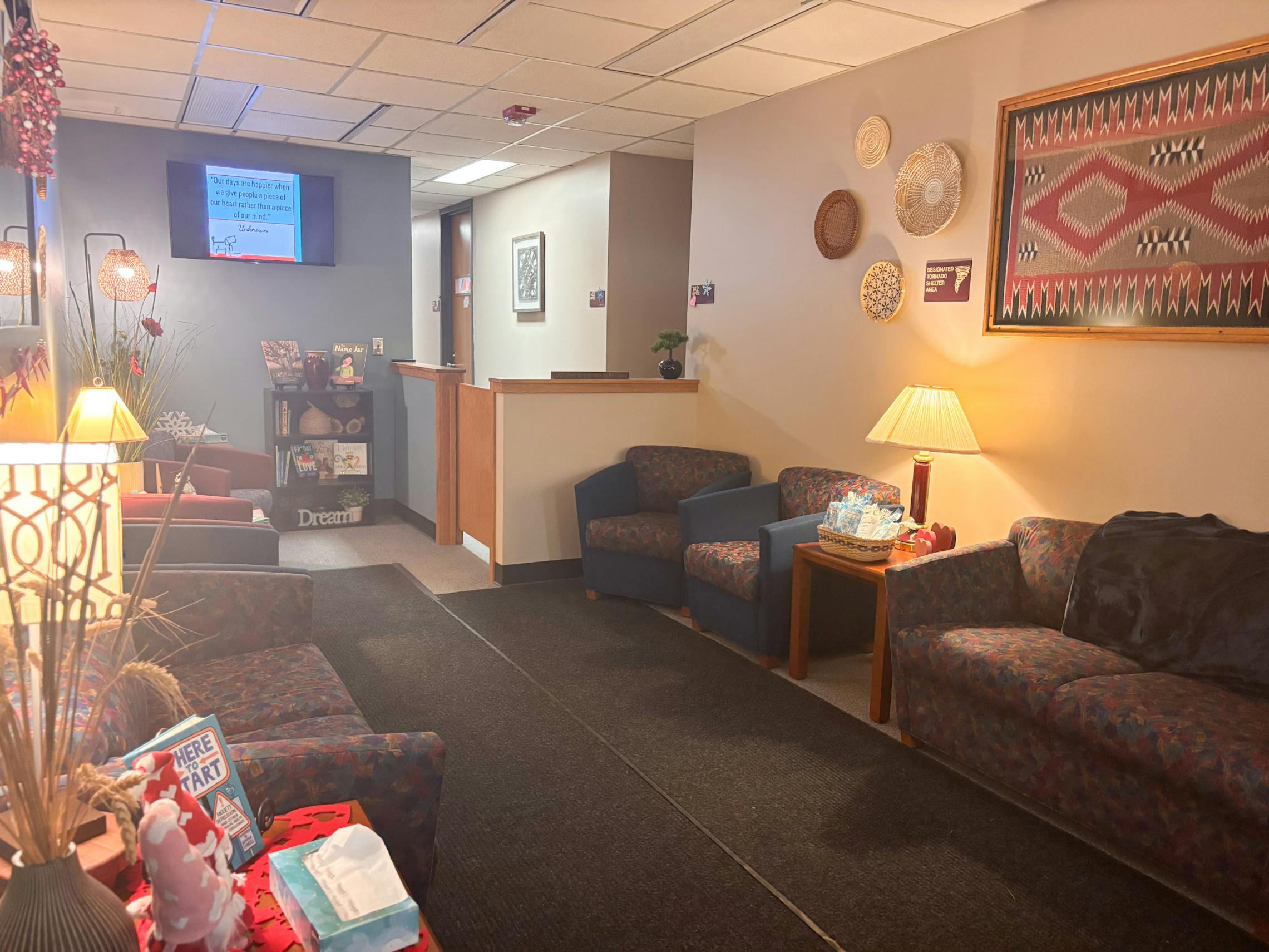
The Central Michigan University counseling center located in Foust Hall, Thursday, Feb. 19, 2026 provides services to students and faculty from 9-5pm. The Center also provides 24/7 support resources through online hotlines listed on their website. (CM-Life | Jasmine Brookins)
Counseling Center
Hutchinson said the Counseling Center’s mission is to help students be successful in lives that are meaningful to them. It provides individual therapy and group services to students for no cost.
The Center offers groups for the following:
- Grief and loss
- Survivor support
- Executive function strategies for time management
- Managing anxiety
Students can call the center or submit an appointment request on its website to get in touch. Hutchinson said they’ll be invited in for an initial consultation to assess what support they need and what they want to accomplish.
On average, she said the center sees 7-8% of the student body each year. The top five reasons CMU students seek counseling are:
- Stress
- Anxiety
- Depression
- Relationship concerns
- Academic concerns
The center doesn’t directly diagnose students because it isn’t required to for insurance companies, Hutchinson said. Students need to see practitioners as part of Behavioral Health Services who specialize in mental health care to be prescribed medication.
“Sometimes, counseling alone isn’t enough to help students address their concerns,” Hutchinson said. “Medication therapy can be another form of therapy to help students manage their concerns.”
She said the center doesn’t limit the number of sessions students can have. It may direct students to forms of help outside of campus, depending on the circumstances.
Crisis resources
Urgent appointments for students in crisis are available at the Counseling Center every day.
For days when the university is closed, Hutchinson said the center partners with a company that provides after-hours crisis support. During that time, students who call the center will be connected to them.
After the call, the Counseling Center will receive a report so it can reach out to the student and help them further.
Roggenbuck said that in situations where CMU Cares becomes aware of safety concerns for a student, students are required to come in and meet.
“My biggest advice is, don’t ever hesitate to reach out,” she said.
Healthy habits
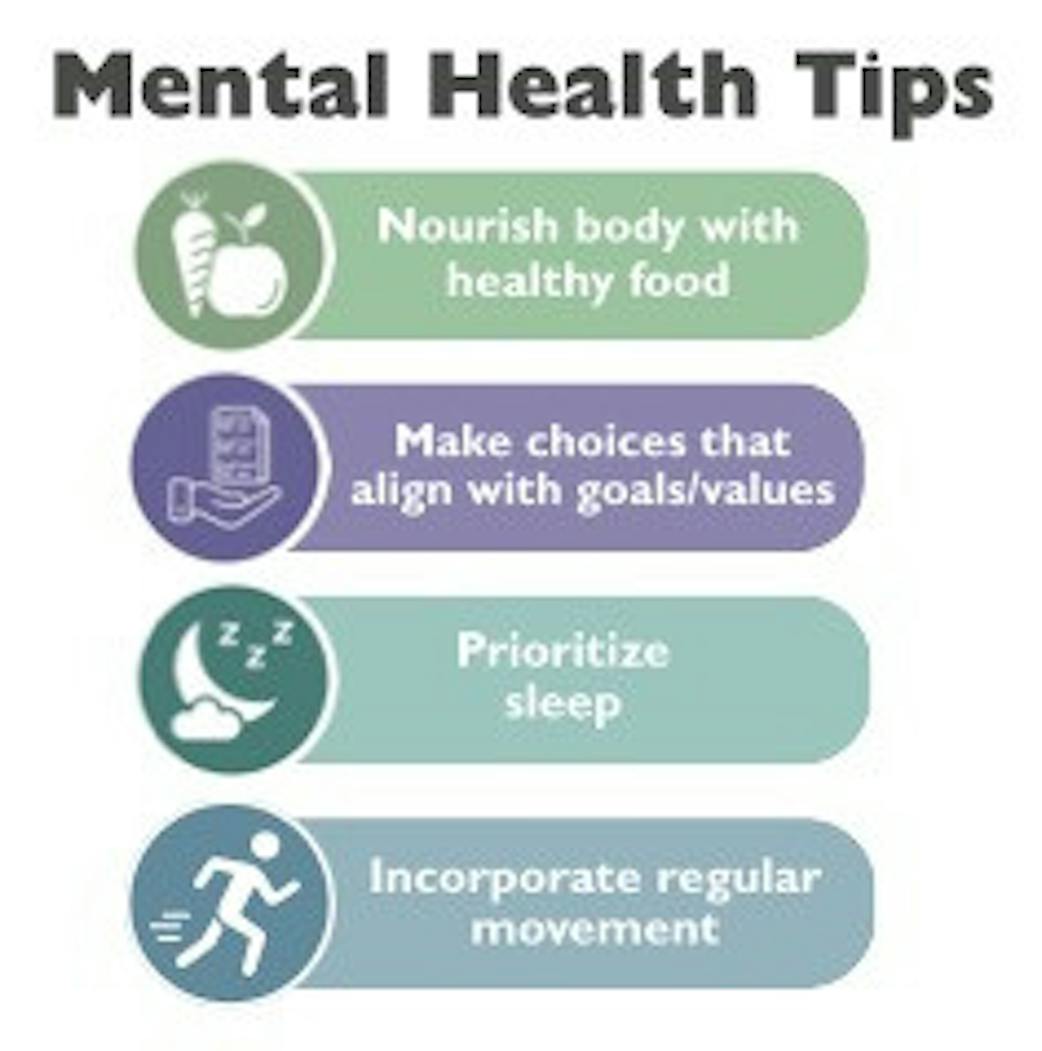
Hutchinson said she can’t stress enough the importance of students taking care of themselves.
Along with prioritizing the basics—sleep, movement and healthy food—she encourages students to evaluate their values and goals in life and make choices consistent with them.
“We tend to feel depressed and anxious when we’re making choices that are inconsistent with the things that we value most and want out of life,” she said.
Individually, or with the help of the Counseling Center, students can work to identify these things in their lives and learn how to prioritize them to improve their mental health.
“You are modeling for others and for yourself how important you are,” Hutchinson said. “You’re worth it.”


