CMU honors the memory of professor Robert (Bob) Kohrman
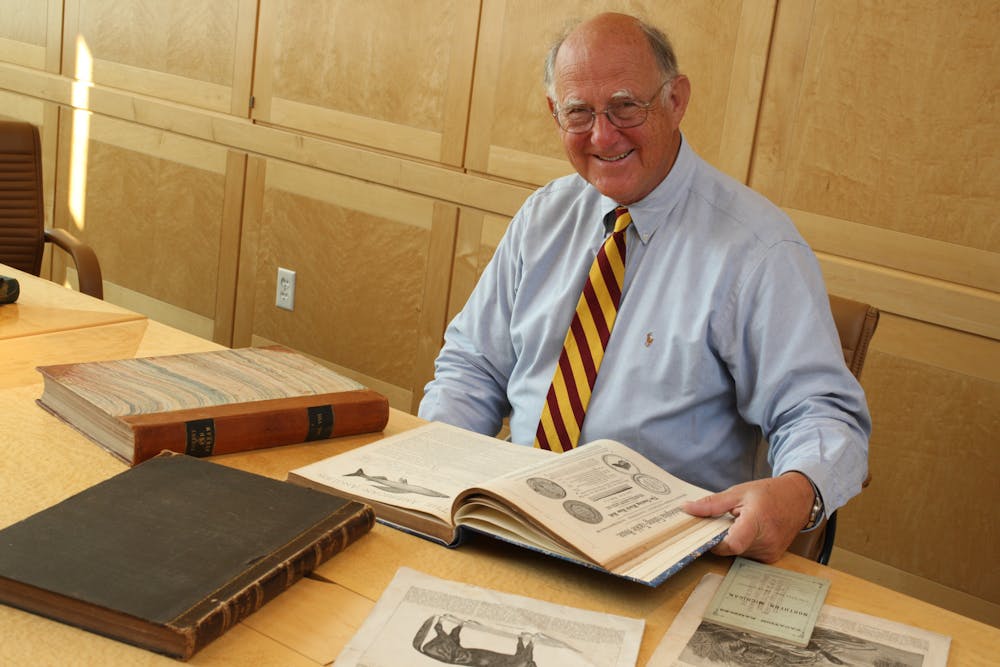
Photograph by Peggy Brisbane, courtesy of the Clarke Historical Library
The Central Michigan University community is remembering the life and legacy of Robert “Bob” Kohrman, a founding dean, longtime chemistry professor and passionate historian whose curiosity and generosity left a lasting mark on campus.
Kohrman, who passed away April 5, spent nearly four decades at CMU after joining the faculty in 1968. He went on to serve in several leadership roles, including department chair, associate dean, interim provost and, in 1997, founding dean of the College of Science and Technology, now the College of Science and Engineering, according to the CMU website.
Colleagues say Kohrman’s impact extended far beyond his titles.


“Bob was a good, good man,” former Associate Dean Rich St. Andre said in a CMU statement.
Even after retiring in 2007, Kohrman remained a constant presence on campus, especially at the Clarke Historical Library, where he pursued research, shared knowledge and supported one of the nation’s most extensive angling collections.
Bryan Whitledge, an archivist at the Clarke, recalled first meeting Kohrman shortly after starting his job in 2011.
“He was really just very nice, extremely intellectually curious, extremely knowledgeable, happy to share information, happy to learn information,” Whitledge said. “There’s researchers, and then we have supporters, and he was both.”
Whitledge said Kohrman became a regular visitor, often stopping by to ask detailed questions, verify historical information or discuss rare materials.
“He knew what he was after,” he said. “But he was also just interested in everything.”
Kohrman was curious about many subjects. Trained as an organic chemist, he earned his doctorate from the Massachusetts Institute of Technology and received recognition from the American Chemical Society for his contributions to the field. At CMU, he mentored countless students and helped expand research opportunities.
But outside the lab, Kohrman cultivated equally deep interests in history, conservation and things as simple as angling and golfing, passions that would shape one of his most enduring contributions.
A legacy in books and history
Over decades, Kohrman helped transform the Clarke Historical Library into a leading destination for angling research.
He donated thousands of rare books, journals and periodicals, along with establishing an endowment to ensure the collection continues to grow and remain accessible.
Among the collection are multiple editions of “The Complete Angler,” one of the most widely printed books in the English language, as well as rare volumes documenting the history of fishing in Michigan and the Great Lakes region.
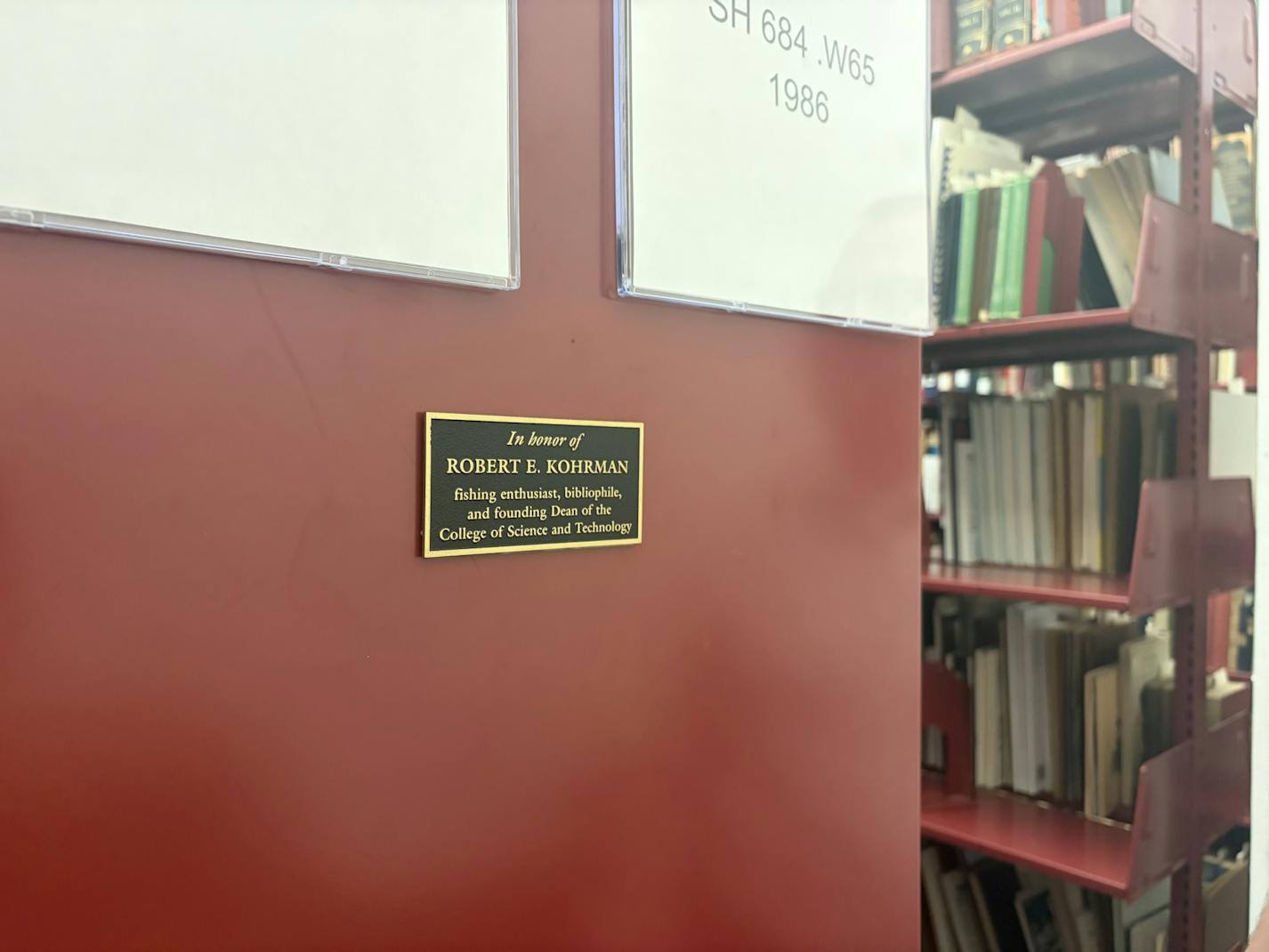
Whitledge said Kohrman’s knowledge of the collection was unmatched.
“He knew every single book and what they were about,” he said.
Kohrman’s fascination with angling history began with a simple question about the Michigan grayling, a fish species that once thrived in the state before disappearing in the early 20th century. That curiosity led him to travel the country, studying rare periodicals and eventually building one of the most comprehensive collections of its kind.
“He would come in looking for one specific word in a book from the 1800s, just to make sure a quote was exactly right,” Whitledge said. “That’s how he was.”
Kohrman also organized exhibits at the Clarke, including one highlighting the history of Dow Chemical operations in Mount Pleasant, further showcasing his ability to connect local history with broader narratives.
His contributions helped elevate the Clarke’s angling collection to one of the largest in Michigan and among the most significant in the country.
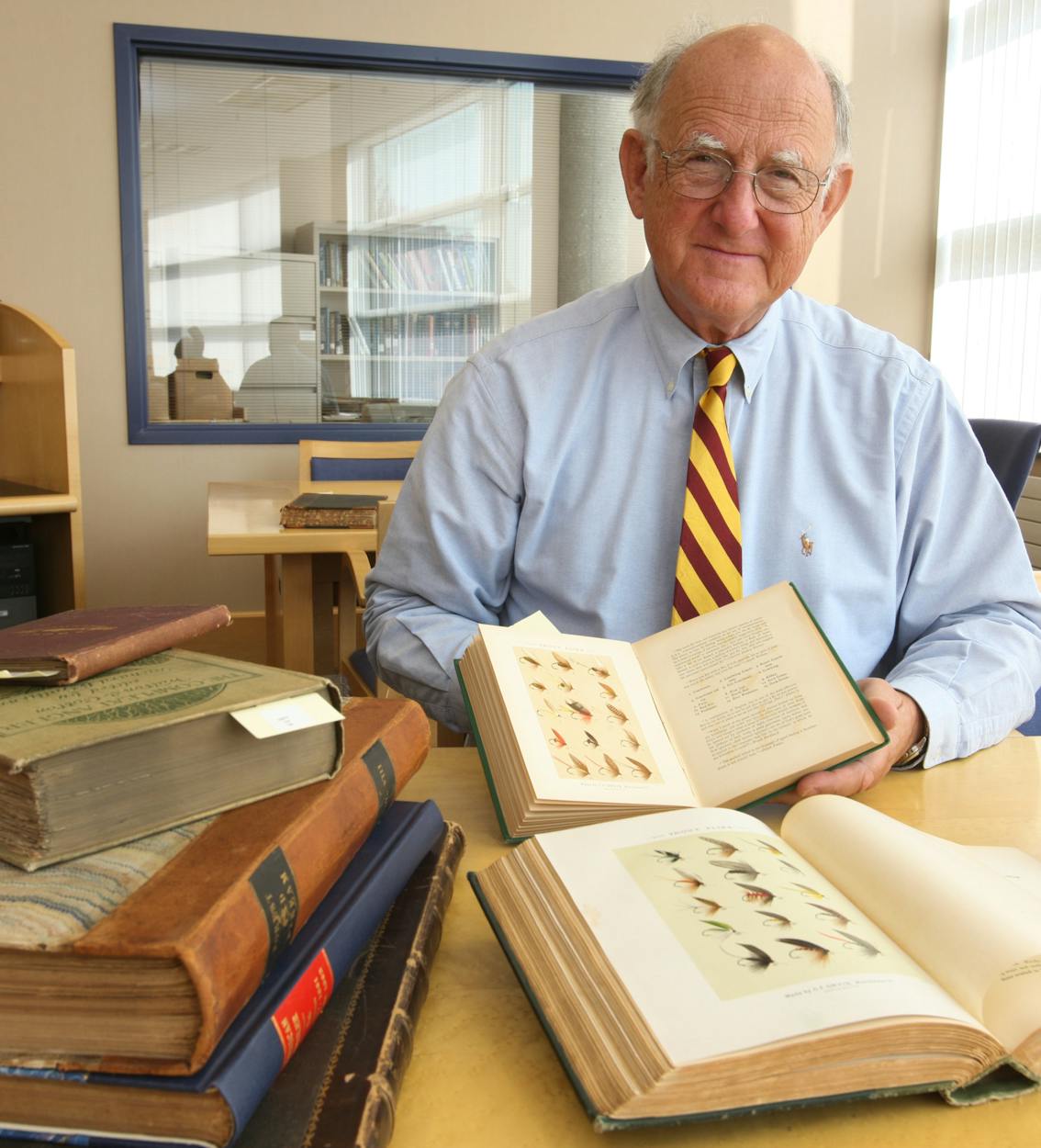
Photograph by Peggy Brisbane, courtesy of the Clarke Historical Library
Remembering a well-rounded life
Kohrman was an avid fisherman who spent decades exploring the north shore of Lake Superior, a golfer who built friendships on the course and a lifelong learner who never stopped asking questions.
“He had a lot of interests, and he wasn’t going to let any of those disappear,” Whitledge said. “He was just a well-rounded human who had a lot of energy.”
Kohrman also remained deeply connected to people. Friends and former students shared memories ranging from fishing trips to classroom mentorship, reflecting the breadth of his influence.
“He was always coming in,” Whitledge said. “And now that he won’t, it’s a bummer.”


