'We are co-stewards with nature'
Saginaw Chippewa Indian Tribe protects land for the next seven generations
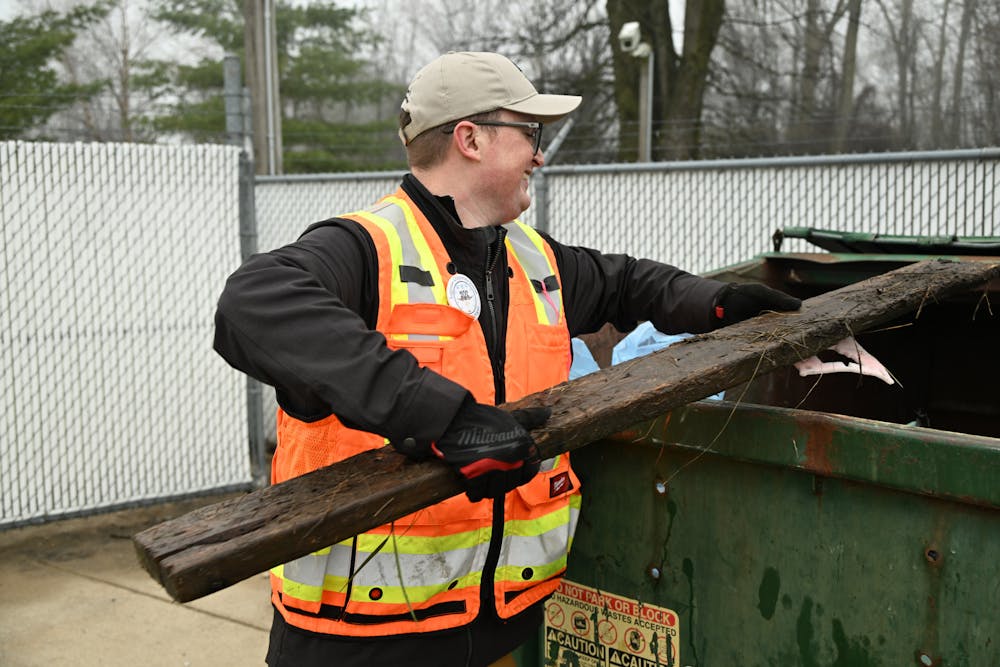
Along the banks of the Chippewa River, the Saginaw Chippewa Indian Tribe is working to protect the land through a blend of cultural teachings and modern environmental science.
Tribal leaders and environmental specialists are focusing on preserving "Mother Earth" not just for today, but for the next seven generations.
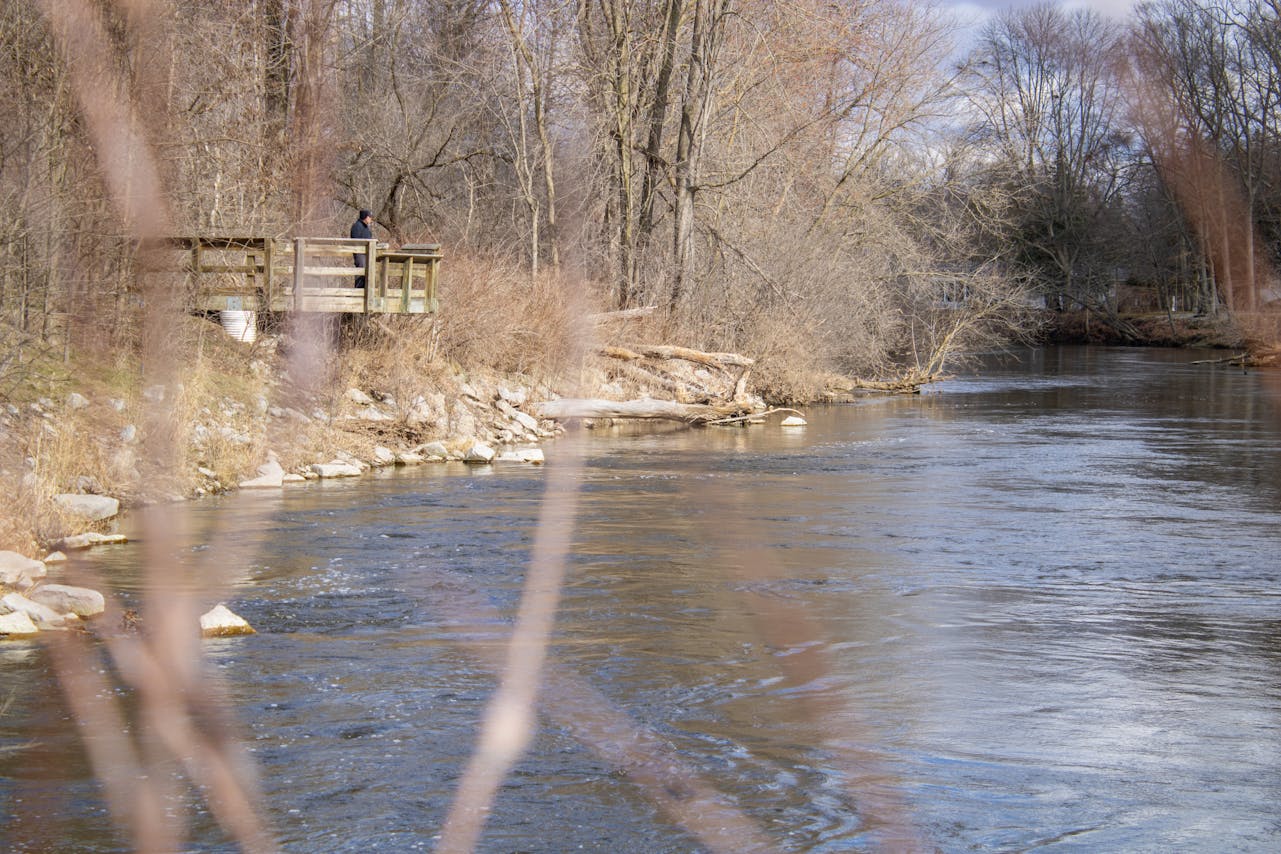
A visitor stands beside the Chippewa River while taking in the scenery at Chipp-A-Waters Park in Mount Pleasant, Michigan on Friday, March 26, 2026. (CM-Life | Cristin Coppess)
According to the Tribe's environmental planning department website, the mission of the Tribe’s Environmental Team is to support Tribal Council relations, represent Tribal interests in environmental issues, protect natural resources and promote sustainable development.
"As human beings, our original responsibility is to care for our Mother Earth in the same way she cares for us," the website wrote.
For Erik Rodriguez, the Tribe's public relations director, that philosophy is not abstract.
“Obviously, when we look at the opportunity for sustainability and keeping Mother Earth in a better shape than we found it, there are a lot of initiatives that come to mind through culture, through modern-day practices and sustainability efforts,” Rodriguez said. “It’s a part of who we are.”
The Tribe’s environmental team oversees programs including water quality monitoring, invasive species control and pollution prevention.
Among those working on the ground is Dustin Hager, a natural resource specialist who began his career with the Tribe as a seasonal technician and now helps lead environmental initiatives.
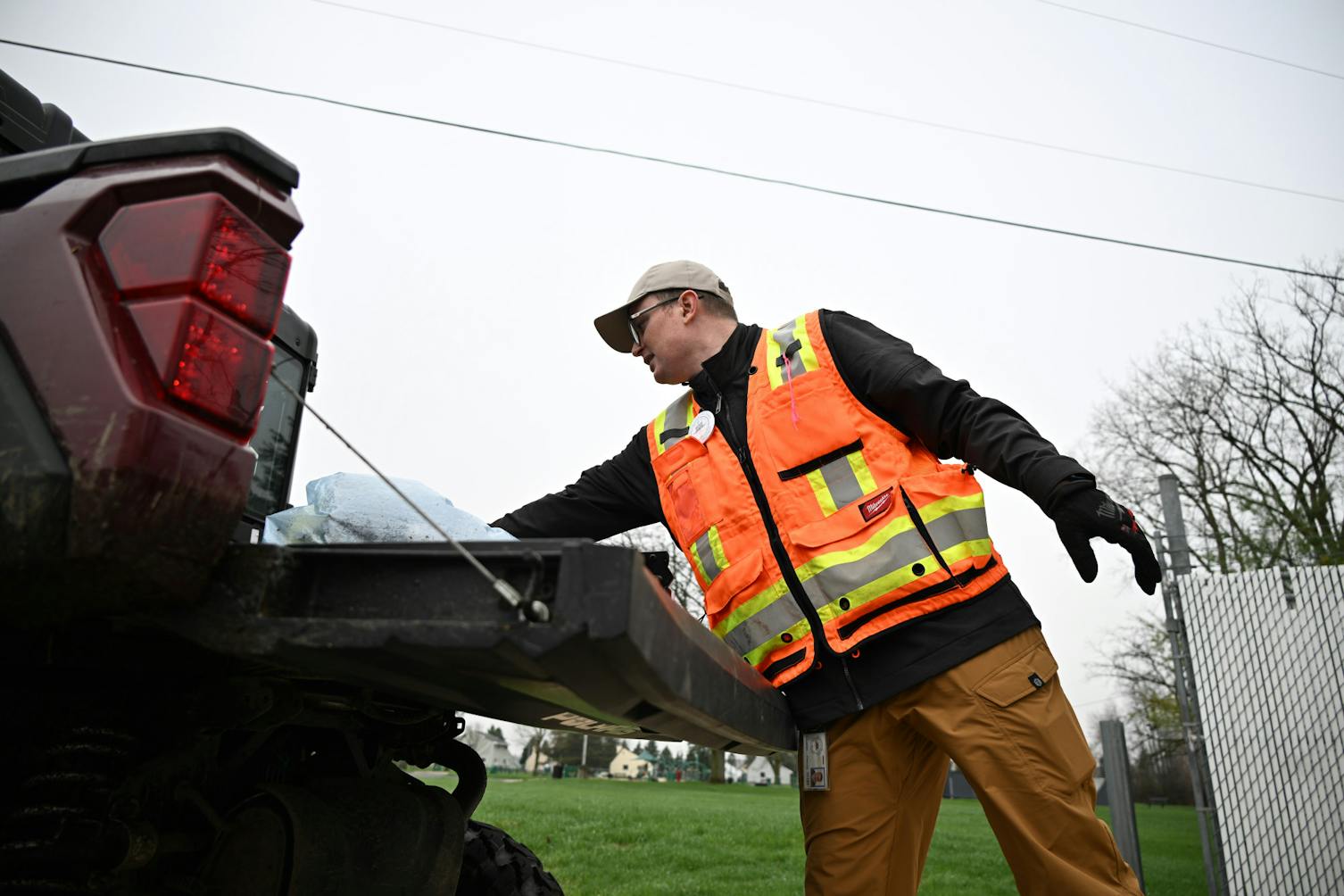
“I fell in love with just the processes and methods of creating systems of success and ecosystems,” Hager said. “I like watching organisms take shape and make their own little internal systems.”
Hager said the Tribe’s approach to sustainability reflects a deep respect for natural systems.
“It is our role to be working with nature to come to a conclusion that works for both the environment and for what the Tribe and the people need,” he said.
One major focus is monitoring the Chippewa River, where water quality testing has identified elevated E. Coli levels in certain areas.
“We work in tandem with our local governments to ensure that we’re doing our best to clean those waterways up,” Rodriguez said.
Hager said water monitoring is one of the Tribe’s most consistent efforts.
“We maintain some permanent river gauges where we keep a pretty solid understanding of where the Tribe’s reservation is at water quality-wise,” he said.
Those efforts include stabilizing riverbanks, improving habitats and addressing runoff issues.
The Tribe has also developed programs to combat invasive species.
“There are threats, and those invasive species are a huge part of what our team looks at to help control and find ways to mitigate,” Rodriguez said.
Hager works on both aquatic and terrestrial invasive species such as buckthorn, autumn olive and honeysuckle.
“You basically can’t go anywhere without seeing them,” he said. “We’re working to push those back on the boundaries in this region as best we can.”
In waterways, the Tribe uses techniques such as diver-assisted suction harvesting.
“That’s where we send a trained specialist down with dive gear to manually remove invasive species off the lake bed,” Hager said. “It’s a very hard task, but it’s very cool.”
The Tribe also works closely with federal and state partners on environmental efforts.
“I think we have a seat at the table when we’re talking with our federal and state partners,” Rodriguez said. “It’s a very convoluted process, but it’s something that the state has always worked with us very closely on."
Looking ahead, Rodriguez said the focus will remain on balancing environmental protection with community needs while adapting to challenges such as climate change and development.
“We have to make sure that this earth is going to be there for generations to come,” Rodriguez said. “If we don’t take environmental efforts seriously, it leaves nothing for our future generations to thrive off of.”
Mino Bimaadiziwin cleanup brings community together
One of those efforts that the tribe is the Mino Bimaadiziwin “Living in a Good Way” Earth Awareness Cleanup. About 30 volunteers came to this event, which occurred on April 17 at Broadway Park Pavilion, spreading out across the reservation to pick up trash and support environmental efforts.
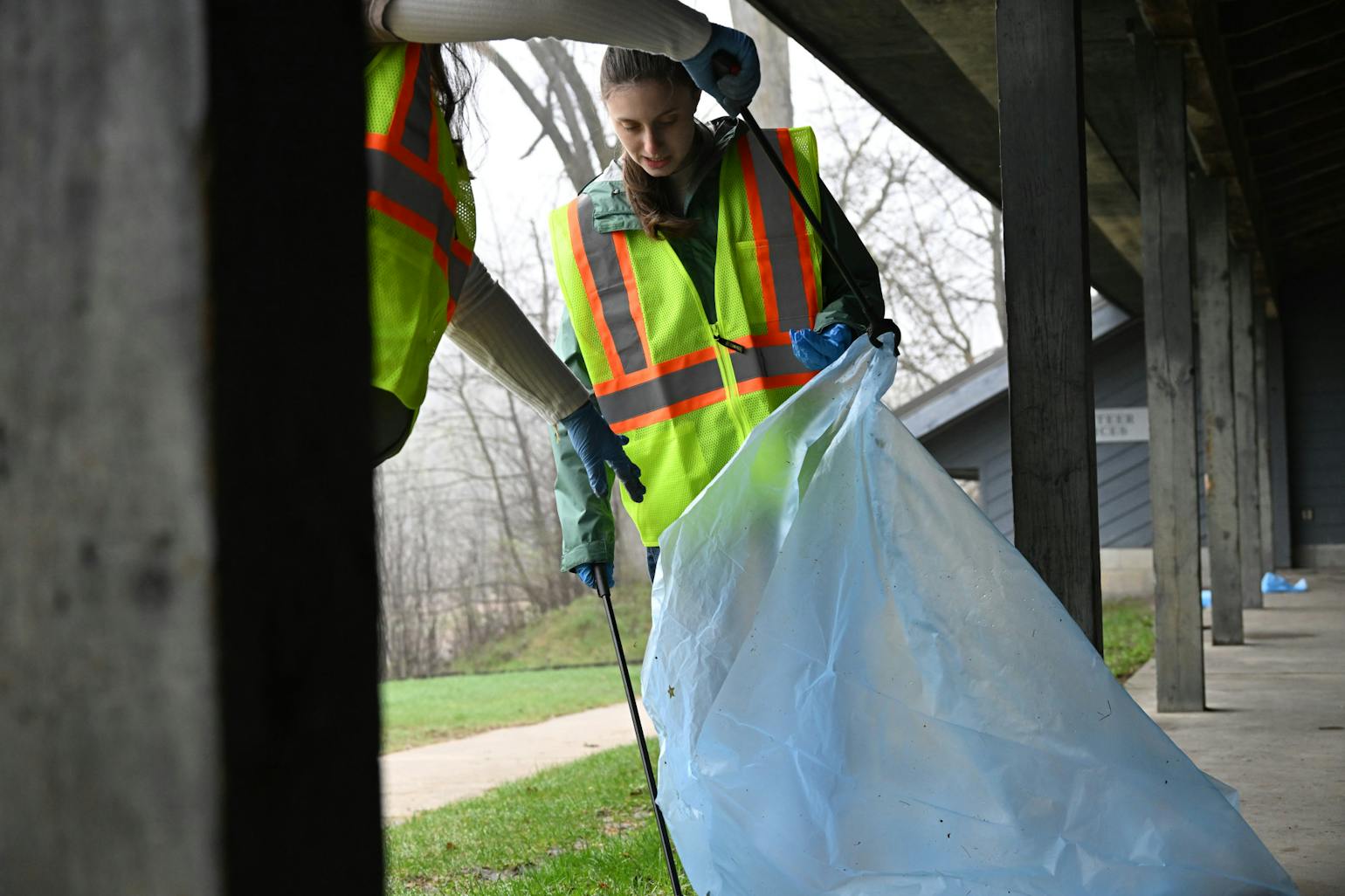
Central Michigan University junior Alison Scheil holds a trash bag for another student during the Earth Awareness Community Cleanup at Mill Pond Park, Friday, April 17, 2026. Scheil is part of Central Sustainability which is a student ran office on campus that focuses on making the CMU community more sustainable through projects, policy, and programming. (CM-Life | Zoey Morse)
The event brought together Tribal members, local organizations and community volunteers, including Central Sustainability at Central Michigan University and Forest Hill Nature Area in Alma. Additional cleanup efforts also took place at Mill Pond Park in collaboration with the city of Mount Pleasant.
Zoey Archbald, a Central Michigan University junior involved with Central Sustainability, said the event highlights environmental responsibility and community connection.
“This event is super important because we wanna show up for the Earth and take care of our communities," Archbald said. "It's nice to create those community connections because it reminds us that we're all sharing the planet and all sharing the community that we live in.”
Hager said much of the Tribe’s environmental work focuses on allowing ecosystems to function naturally.
“Most of the time, nature doesn’t need our help. It’s a situation where we just have to get out of its way,” he said.
Beyond cleanup events, the Tribe also engages the public through initiatives like free boat wash programs at launches throughout the year. These efforts aim to prevent the spread of invasive species and educate boaters on proper decontamination practices.
“A lot of people are unaware that it’s actually a ticketable offense if you don’t clean your boat before going to another body of water,” Hager said.
The Tribe also hosts river cleanup events during warmer months, where participants travel by kayak and canoe to remove debris directly from waterways. Hager said that community is important in order to help the environment.
“I have no chance of success in my position if our neighbors cannot succeed in theirs,” Hager said. “If the property next door still has invasive species, I will never eradicate it on our lands. We are co-stewards with nature.”
Assistant Visual Editor Zoey Morse contributed to this story.
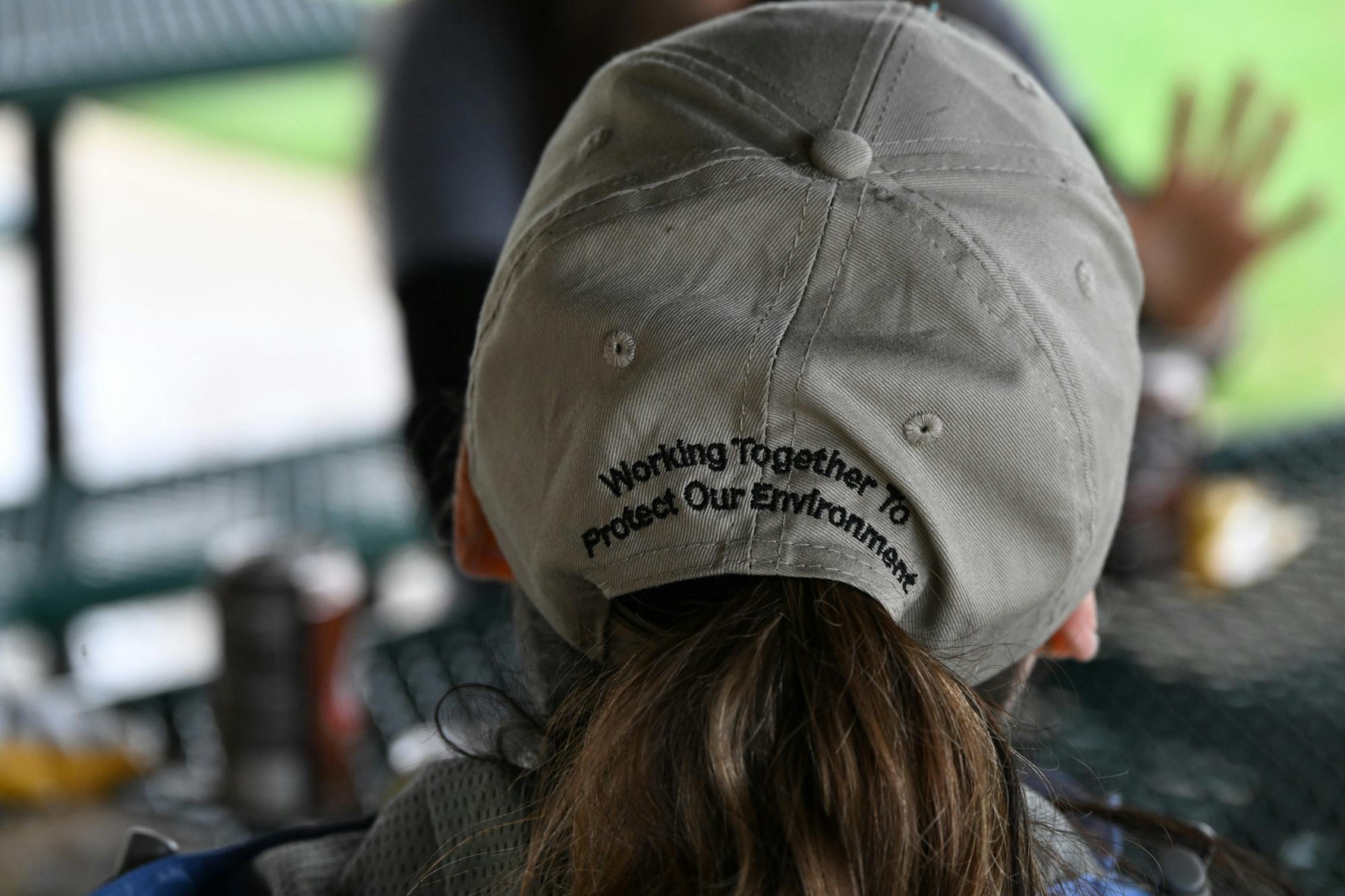
Environmental Outreach Coordinator for the Saginaw Chippewa Indian Tribe Katie Hager wears a hat that says "Working Together To Protect The Environment" during the Earth Awareness Community Cleanup, Friday, April 17, 2026. "I think there is a lot of people that come to these that already are out doing a lot of stuff on their own and I like to use these to pour back into our cups because we always need to be cleaning up the Earth so I think that when we do it together it feels like we are making more of an impact." Hager said. (CM-Life | Zoey Morse)


