Column: Censoring stories, silencing voices
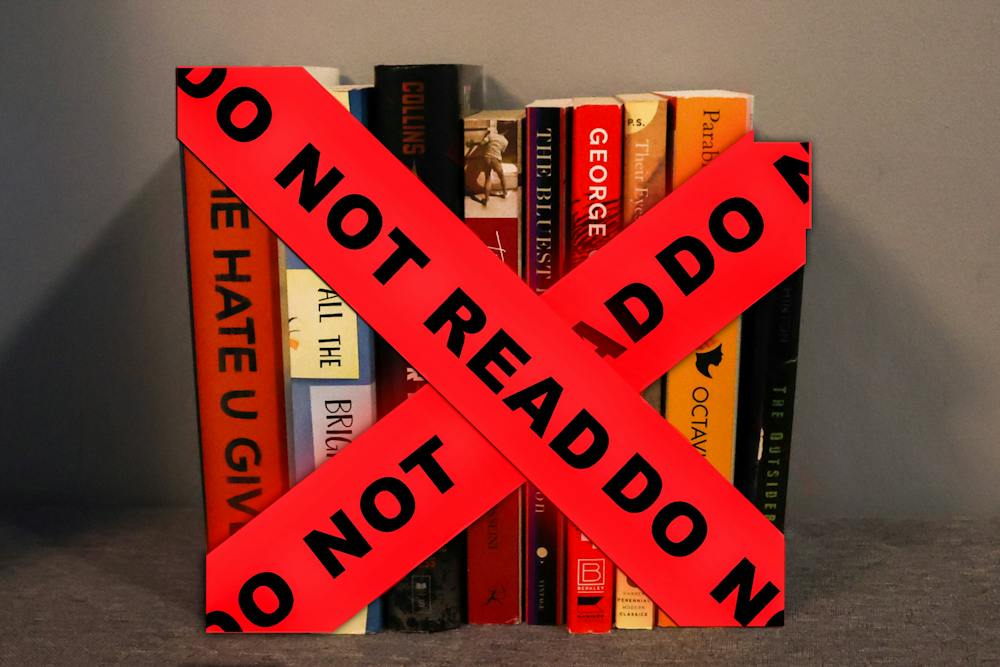
(Photo Illustration | Jasmine Brookins)
It's so refreshing that in 2026 more and more people continue to recognize the importance of representation in books available in classrooms and libraries.
Oh wait, the opposite is happening!
During the 2025-2026 school year, nearly 12,000 books were banned in public schools nationwide, which is the largest number banned in a single school year, according to PEN America.


Last year, libraries saw the highest number of books censored and challenged, according to the American Library Association (ALA).
In public schools and libraries built to educate, people should have unlimited access to reading material. Censoring stories doesn’t stop them from existing.
The top three justifications for challenging and censoring books, according to the ALA, were the following:
- False claims of illegal obscenity for minors.
- Inclusion of LGBTQ+ characters or themes
- Covering topics of race, racism, equity and social justice
Those aren’t the complaints of only overprotective parents. According to ALA, in 2025, 92% of book challenges were done by government officials, decision makers and pressure groups, which is a 72% increase from 2024.
The fact that the subjects being flagged in books are mostly related to diversity and identity is concerning enough. The government being responsible for the majority of that is even more alarming.
Stories, information and perspectives are available in schools and public libraries should not be censored. These are places built to educate. People should be exposed to different viewpoints.
Censoring stories representing real people and events in the world does not make those experiences disappear. It only creates less compassion towards them.
Reading different points of views expands peoples’ understanding of the world and makes them more empathetic, according to the National Library of Medicine.
Banning books because someone objects to the content in them robs others of the opportunity to understand that content, which creates a vicious cycle. People should be exposed to what they can’t relate to, especially in the comfort of a classroom. After reading "To Kill a Mockingbird" by Harper Lee, it allowed me to learn about racism in a way no textbook or lecture could ever teach me.
Dictating what identities are allowed on libraries' and school's bookshelves also robs people of the chance to see themselves represented in a story.
As an avid reader, finding stories that include feelings or situations I can relate to is my favorite part of reading. As a college student, an education system that encourages the exchange of different ideas is important to me.
I could go on and on about the problems with how successful censorship has become. Here is the bottom line: the world doesn’t need to be more filtered, it needs to be more understanding.


