Column: Why an unconventional study abroad can be worth it
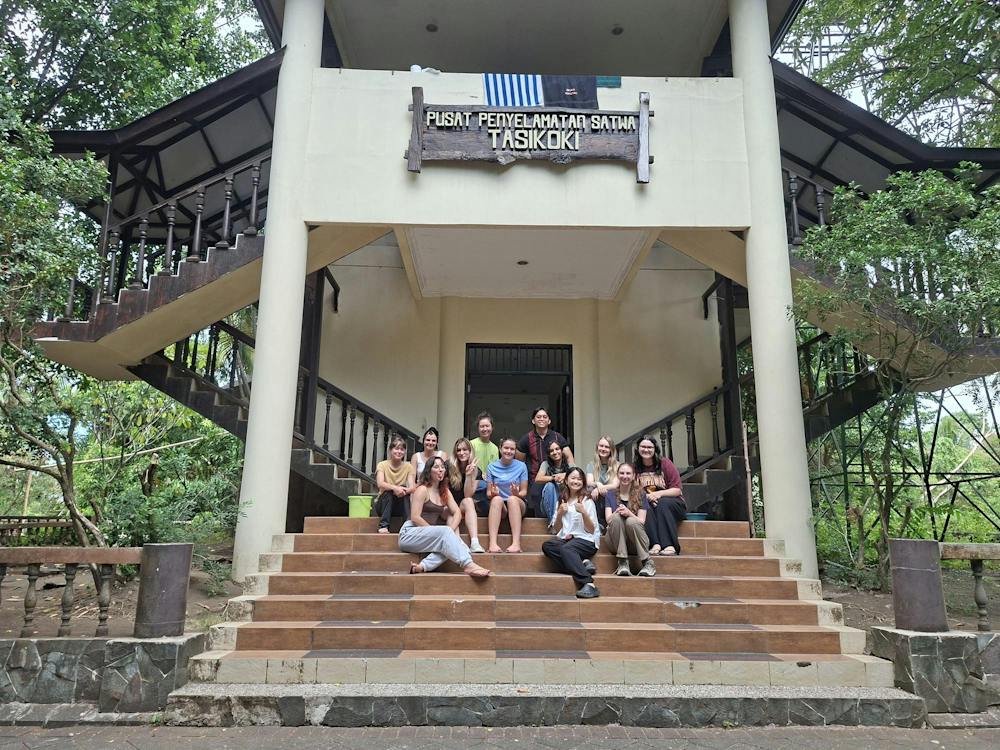
Central Michigan University student Beth Nocerini (far right) sits with other volunteers and workers outside of one of the buildings at the animal rescue center, Tasikoki, in North Sulawesi, Indonesia on July 31, 2026.
Have you ever sat and thought about all of the places you would go if given the chance? Paris, Japan, Bali, the Bahamas, the list could go on. For studying abroad as a college student, I always saw myself in Italy for a semester.
As it came closer to picking which study abroad to do, I realized a full semester might be too long for me. So, I started talking with Kaya, an agency Central Michigan University uses for unconventional study abroad. With the program, I could choose my start and end date and how many weeks I was there for.
Volunteering at an animal life rescue for six weeks in North Sulawesi, Indonesia is what I ended up choosing. Don’t ask why, thinking without doing is kind of my thing.


While in Indonesia I learned many new things. Here are a few.
1. The Honors program at CMU will let you pretty much do any course for a study abroad.
I major in journalism with a minor in political science and I am in the Honors program at CMU. Through the Honors program, students can do a unconventional study abroad with an independent study that puts credits towards the diversity credit that’s required for Honors students to graduate.
I submitted a proposal explaining the diverse culture I would be experiencing, as well as having the experience to stay with people from all over the world. The Honors program had no issues approving and allowing me to go forward.
2. Not all study abroad trips require extensive research.
Most volunteers would have a story on how the rescue center, Tasikoki Wildlife Rescue, was recommended to them, or how they found it while doing research. In my experience, I saw a program that looked very interesting and involved animals, so I signed up.
While I wrote a research paper about North Sulawesi before going and skimmed the welcome packet on the rescue, I did a lot of learning on the job.
3. Indonesians live a slow-paced lifestyle.
We would frequently take breaks while working with the keepers who would oversee feeding the animals and general maintenance of the enclosures. Frequently meaning, 10 minutes of work, 10-minute break. If I had a dollar for every time I was offered a cigarette during these breaks, I would have my college paid for.
4. Monkeys really like bread.
A big part of a volunteer job at Tasikoki is coming up with enrichment ideas for the animals. This is something that duplicates behavior in the wild while also keeping the animal occupied for some time. One day, the vets at Tasikoki gave me a loaf of bread and told me to figure out how to give it to the monkeys in enrichment.
An hour later, three keepers and I were sitting by the monkeys shoving empty coconuts I found with bread wrapped in leaves.
5. Sun bears are extremely smart.
The sun bears would have to be put in a full cement enclosure at night to ensure they did not escape. They were very good at digging holes under the cement walls. When they hear people coming, they cover the hole with rocks, so their plan of escape is not busted. They only got out once while I was there and were taken down with homemade blow darts filled with cow tranquilizer.
6. Geckos, spiders and other bugs I could not identify are not that bad to live with.
At any given time, you could count anywhere between 10-15 geckos on the ceiling, walls or floor of the bunk rooms where volunteers stayed. Spiders as big as a Crumbl cookie would greet me in the morning in the bathroom. Bugs of all colors and who knows what species could be found in the shower, bunk rooms, basically anywhere. Thankfully we slept under bug nets.
7. Ants can still get into a fully tightened Owala water bottle.
Tiny ants lived with us and would get into everything. If food was left unattended for more than five minutes, consider it gone. Unless it was in the glass case, it was in danger, and even then, they would still occasionally get in the case. Every morning, I would check my water for ants after having a crunchy sip one morning. Half of the time, the little heathens would be crawling around in there. I would gas them with bug spray.
8. If you go to Bunaken Island, make sure you wear shoes that can go in the water and will protect and stay on your feet.
Coming back from an island during low tide means the boat cannot reach the shore, so you must get out and walk. For about two football fields, we walked through ankle deep water that was filled with venomous snakes, sea urchins and star fish. All in all, it was a complicated walk.
9. Ketchup is not all that bad with rice.
One day after eating rice for the third day in a row, one of the volunteers questioned a mysterious bottle full of red liquid that was out with every meal. After further inspection, he noticed it was ketchup and everyone celebrated.
I did not understand the cheering for ketchup since nothing we got I felt went well with it until I saw others putting it on the rice. It honestly made the plain rice much better. Judge me all you want, but desperate times call for desperate measures. I tried it, and it was a staple in my diet from then on out.
This study abroad was perfect chaos, from the monkeys to the many volunteers. If you are ever thinking of doing a study abroad, do it. If you are thinking of doing an unconventional one, absolutely do it.


