Public given chance to review, give input on master plan
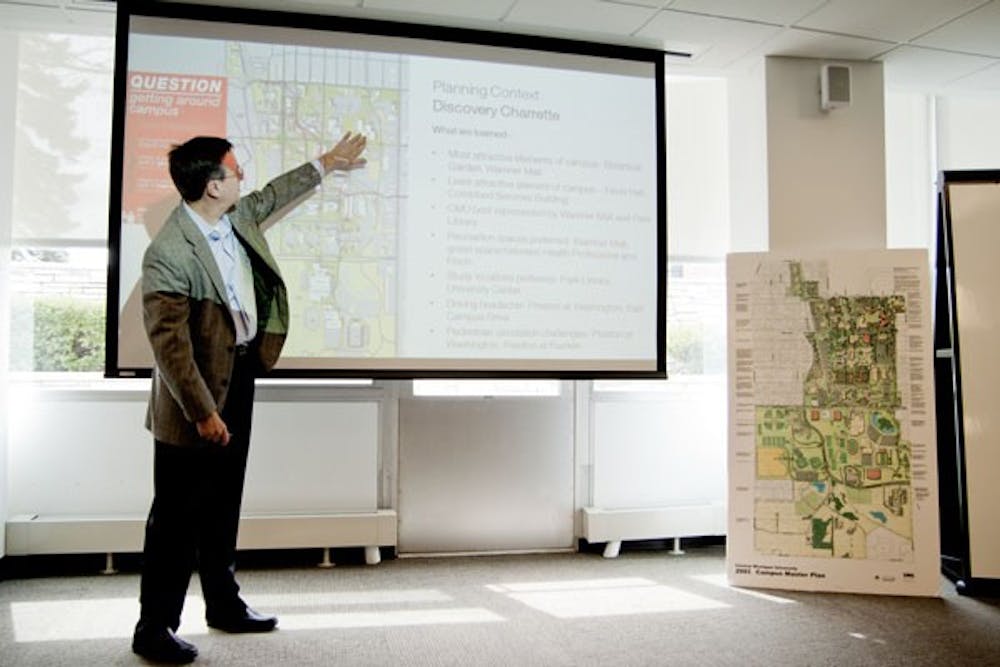
The public had the chance to offer input about the future of the university when the 2013 Central Michigan University Draft Master Plan was presented at a town hall meeting Wednesday.
The campus master plan was first released in 2001 and was updated again in 2003. The plan focuses on space utilization, facilities condition assessment, infrastructure assessment, land use and the development of a 10-year capital plan.
“This is happening at a really good moment,” said Dave Rose of the SHW Group. “We were very aggressive in getting your input about the plan and tried to accommodate your thoughts, suggestions and comments.”
SHW Group is an architectural and planning firm that has done previous work for CMU. Other consultants on the project include Paulien and Associates from Denver, Colo., and a group of engineers from Fishbeck, Thompson, Carr and Huber of Grand Rapids.
Thoughts, suggestions and comments from the public were collected during the data collection and discovery parts of the planning process.
“It has been exceptionally inclusive,” Rose said.
More than 3,200 people took a survey about the proposed master plan, and more than 100 people were interviewed.
Some of the focuses of the new master plan are to improve traffic flow on campus and to make it easier and safer for pedestrians to get around campus on foot.
Proposed changes include expanding several campus parking lots, adding driving cut-throughs out to Mission Street and the construction of roundabouts on main streets and busy intersections.
“One thing we hope to do in the long run is put in some roundabouts,” Associate Vice President of Facilities Management Steve Lawrence said.
Other proposed changes to campus to enhance walkability include the addition of a “green spine,” or green space which would be bike and pedestrian friendly, and would run the length of campus.
Other parts of the master plan include a facilities condition assessment and infrastructure assessment.
The assessment will focus on which buildings on campus are well-maintained or preserved and which will need repair within the next seven to 10 years.
A major component of the master plan is the 10 year capital plan, which will determine the budget for any component of the master plan to be built within 10 years.
Juliet Maes, of FTC and H, a firm working closely with SHW Group, said components of the master plan to be included in the 10 year capital plan should be sorted out and submitted for approval by the Board of Trustees by July.


