CMU’s ASL community highlights Deaf culture beyond Deaf History Month
As Deaf History Month comes to a close, students, faculty and community members at Central Michigan University say the impact of American Sign Language and Deaf culture continues well beyond April.
Through ASL courses, student organizations and community involvement, CMU has created opportunities for students to learn the language and engage with Deaf culture.
Language and culture


For Christine Kinne, a Deaf instructor, that work begins in the classroom.
Kinne, who communicates solely through ASL, said her teaching approach relies on immersion, encouraging students to develop fluency through visual communication rather than spoken language. She said this approach pushes students outside their comfort zones and helps them build real-world communication skills.
“It encourages the students to use their ASL and practice more because they cannot go back to what they are comfortable with by talking,” she said.
She emphasized that language and culture are inseparable in ASL education.
“You cannot just learn ASL without learning about culture,” Kinne said.
That cultural understanding includes communication norms that differ from hearing spaces, helping students navigate Deaf environments respectfully while building their language skills.
Beyond the classroom
Outside the classroom, students said organizations like the American Sign Language Society, or ASLS, provide an important extension of that learning.
Fiona Ambrose, a senior communications major with a minor in sign language, said the organization allows students to practice ASL in a more natural and consistent way.
Ambrose said the group stands out for the sense of connection it creates among members, something she hasn’t experienced in other classes.
“Here it actually feels like a community because we spend time talking to each other,” she said.
She said regular interaction outside of class is key to developing both language skills and cultural understanding.
Ambrose’s perspective on accessibility deepened during a study abroad experience, where she encountered a Deaf woman who had never had consistent access to language, making communication difficult and isolating.
“It’s just crazy to see how detrimental it is if someone doesn’t have access to language,” Ambrose said.
For many students, ASL is more than an academic subject.
Accessibility and connection
Rebecca Reilly, a second-year student studying education and special education, said learning ASL has shaped both her academic path and personal identity. She said the community she found through ASLS has been transformative.
“Learning ASL has given me a sense of belonging I’ve never felt before,” she said.
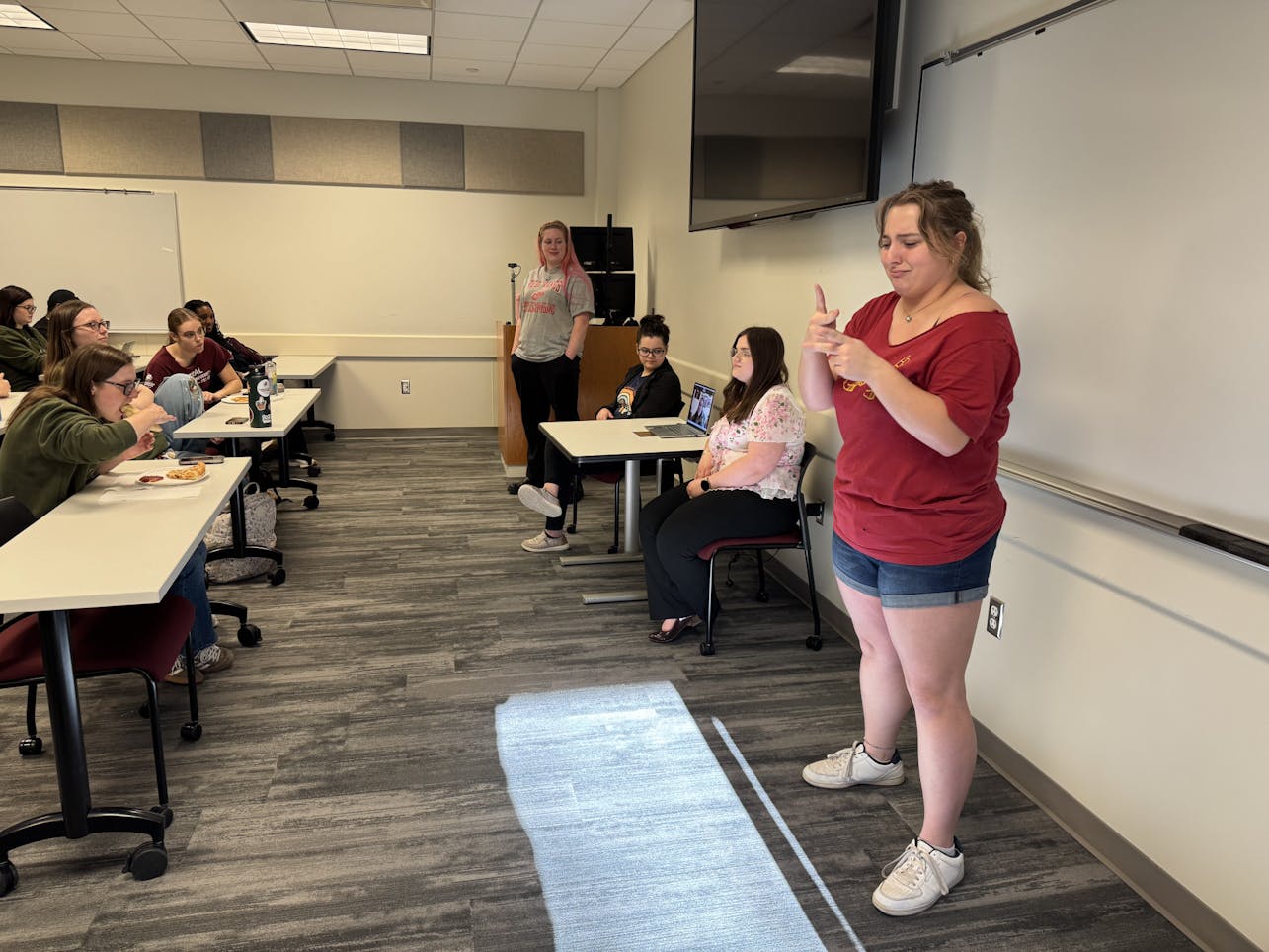
Reilly said the experience has also influenced her future goals, including pursuing certification as an interpreter.
At meetings and campus events, interpreters play a key role in making communication accessible. Reilly said that access is not always consistent.
“Everybody should be able to have the same access to knowledge that is being shared,” she said.
She said while CMU offers ASL courses and related programming, there is room for improvement in making resources like interpreters more widely available and in promoting ASL alongside other language programs.
Real-world experience
That need for connection extends beyond the university.
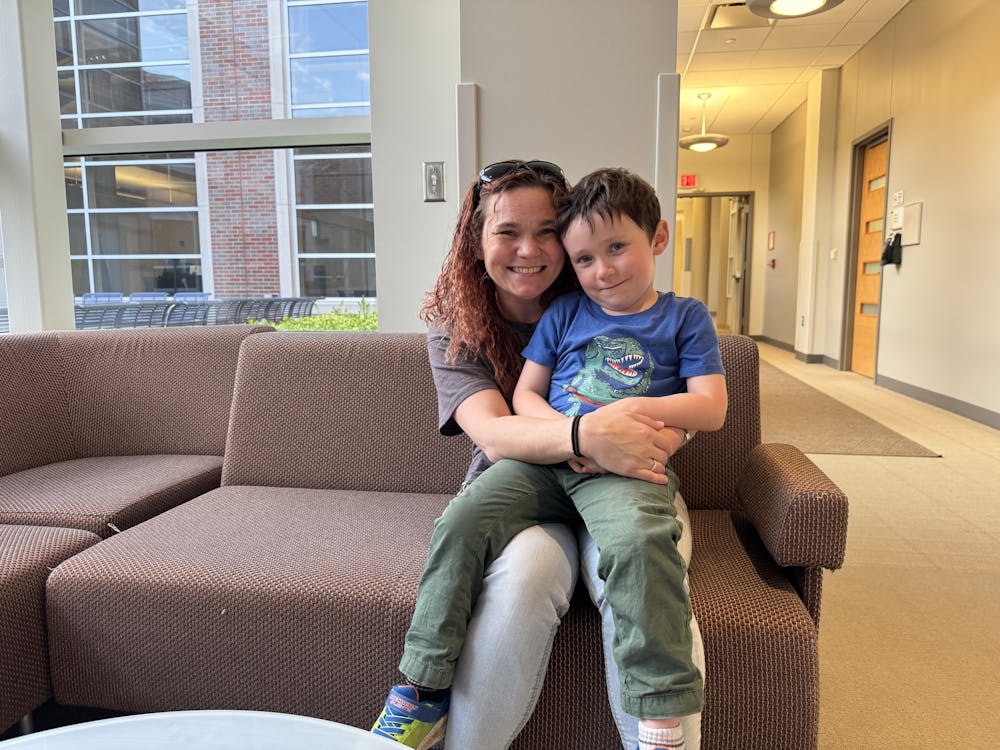
Crystal Braley, who recently moved to the area, said she is still working to find connections within the local Deaf community, which she described as small.
According to the National Deaf Center, about 11 million people in the United States identify as Deaf or have serious difficulty hearing.
Braley, who is Deaf, attends ASLS meetings to practice signing and engage with students interested in Deaf culture. She said seeing students learn and use ASL is encouraging, even in a community with limited Deaf representation.
“I’m happy and really hopeful that they continue practicing and being in the Deaf culture,” she said.
Faculty said these connections are essential to developing both language skills and cultural awareness.
Kendra Miller said her work focuses on connecting students with the Deaf community through both classroom instruction and real-world experiences.
Miller, who has a background in clinical social work with Deaf and hard-of-hearing individuals, said hands-on interaction helps students move beyond textbook learning and better understand both language and culture.
“Interacting with native signers provides students opportunities to use and expand their own ASL skills and better understand Deaf culture while building community connections that foster respect and promote inclusivity,” she said.
She said exposure to the Deaf community is especially important given how many Deaf individuals are born into hearing families.
“Approximately 90% of Deaf children are born to hearing parents who often have no prior experience with deafness or sign language,” Miller said.
She said that many students enter ASL courses with misconceptions about Deaf individuals and communication, but those perspectives often shift as they gain experience.
“Many mistakenly view deafness as a disability to be fixed rather than the superpower it can be,” Miller said.
Miller said misunderstandings about communication are also common, including assumptions about lip reading.
“Most lip readers only catch three to four out of every 10 words,” she said.
As Deaf History Month ends, those involved in CMU’s ASL community said continued engagement is key, whether through learning basic signs, attending events or building relationships within the Deaf community.
Ambrose said a deeper understanding comes with time and effort.
“The more time you spend in it, the more complex and beautiful it is,” she said.
For Kinne, that impact is often seen in everyday interactions.
“Trust me when you sign the Deaf person, their eyes lighten up,” she said.


