Skating the line
Behind the scenes of running CMU's D1 club hockey team
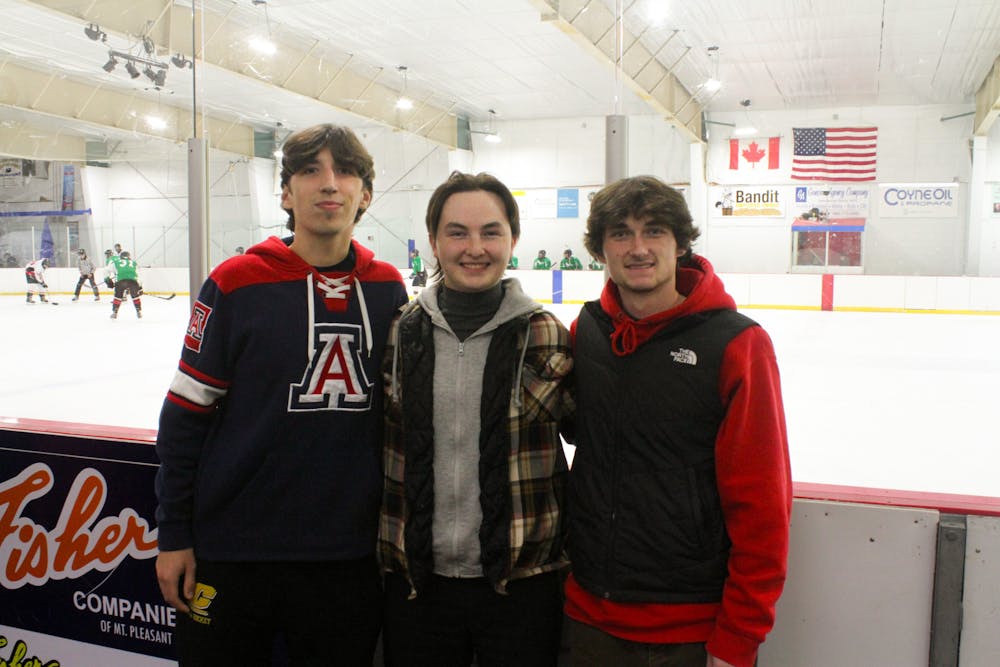
Aiden Reamer, Dylan Niermeyer, and Riley Joyce pose at Martin Ice Arena in Mt Pleasant on November 19, 2025. They are the primary members of the CMU ACHA Division 1 Club Hockey team's executive board. (CM Life | Chance Hamilton)
Central Michigan’s Division One Club Hockey team is experiencing a season of change. In March 2025, the team announced its move up to the DI level of the American Club Hockey Association (ACHA), facing new opportunities and challenges to overcome in the process.
However, the executive board of the team looks forward to tackling these and finding success as they continue to grow their program. This e-board consists of three current players on the team, who run the major day-to-day operations.
These three members include graduate student Dylan Niermeyer, the goalie, who serves as the club president. In addition, junior goalie Aiden Reamer acts as vice president, and senior forward Riley Joyce is the team’s treasurer.


Niermeyer has been the president of CMU’s team for roughly three years, and he assumed the position when members of the e-board at that time were either graduating or transitioning to become members of the D3 club hockey program. For Reamer and Joyce, both in their first year as e-board members, the process operated democratically.
“At the end of the year, we have team elections,” Reamer said. “When a spot opens up, a couple guys might run for it. You make your case, say why you want to do it … and the team votes.”
Additionally, members can use this experience for their resumes.
“I wanted to do it since I’m a finance major, so I thought it would tie in and I could learn some stuff,” Joyce said.
Modern operations of the team have a polished system in place, yet it wasn’t always this way. The history of the team is somewhat murky, but the e-board’s members agree that the team was founded in the early to mid-1990s.
“This team has been through a whole series of ups and downs,” Niermeyer said. “There was a hazing incident in 2012 that shut down the team for five years. Then there was another tragic incident where a kid was celebrating his 21st birthday in Grand Rapids, and he passed away from a tragic accident, and they took the year off.”
The team was then reestablished in 2017.
“It’s had its ebbs and flows, then some staff changes, and so we’re finally starting to get our foothold,” Niermeyer said.
Ultimately, there are still many intricate decisions that must be made for the team to operate smoothly, and it starts with the proper management of finances.
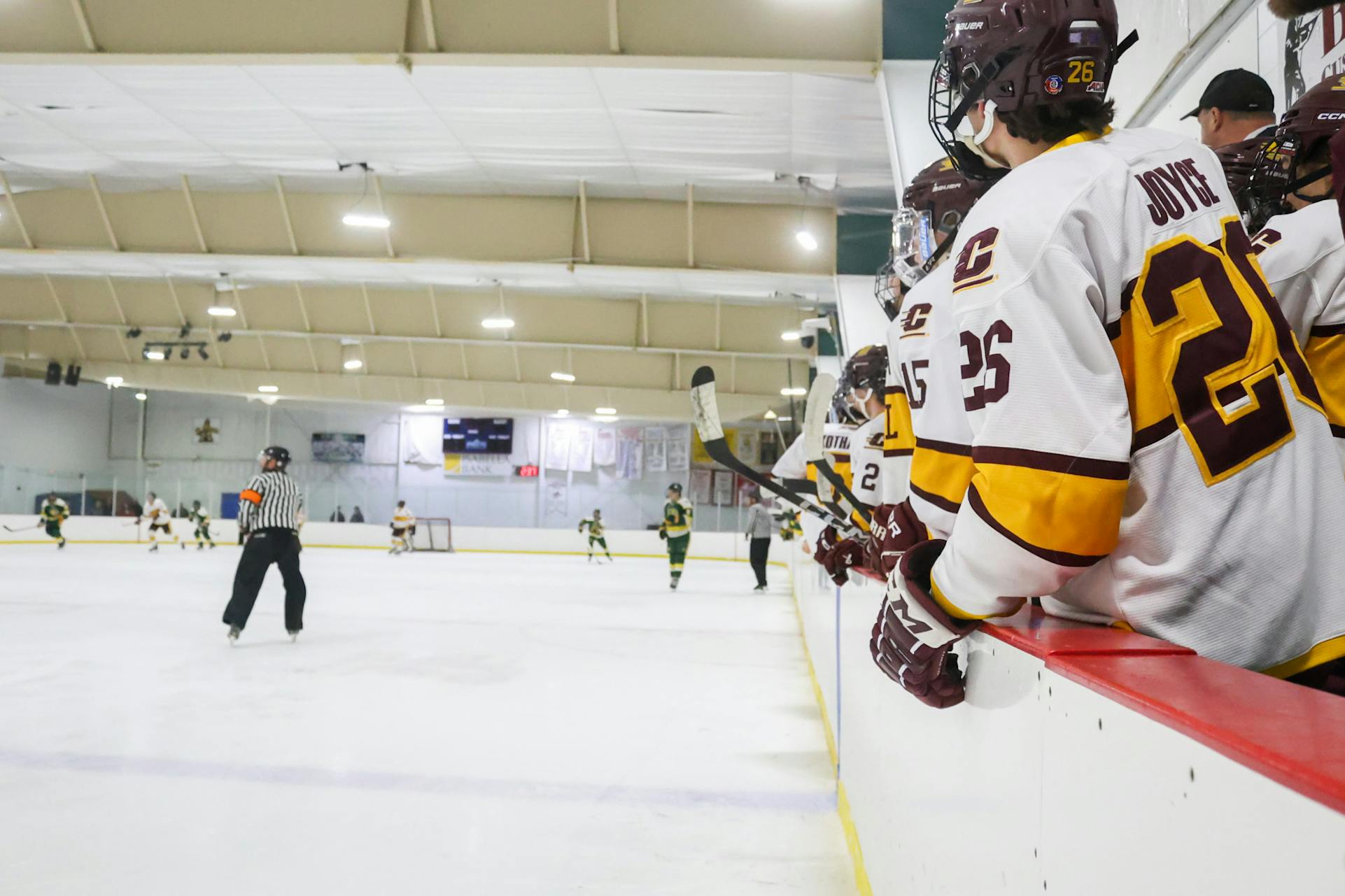
The Central Michigan University D1 men’s hockey team hosts Northern Michigan University for game two at Martin Ice Arena on Saturday, Nov. 8, 2025. The team came back from the first game, defeating Northern 4-3. (CM Life | Jasmine Brookins)
Fundraising and the Budget
Most of the team’s funding is provided by player dues, which are paid monthly. New players contribute $3,300 total, which includes jersey costs for the entire team, while returning players pay $2,900. The total for dues sits roughly around $85,000 per year.
Tickets are another factor for supporting the program, but a significant piece of the puzzle results from fundraising opportunities, which amount to roughly $30,000/year. This season, the team has been intentional about involving the community to build further financial support from those in the Mount Pleasant area.
“This year, we’re trying to do different things to help increase engagement and also involve more people, other than just friends and family,” Niermeyer said.
Through working with the team’s fundraising committee, which consists of the e-board members, current players and other staff members, the team has established numerous ways to increase funding.
Some chances for the community include game day events, such as auctioning off special edition jerseys and a Chuck-a-Duck activity for fans. In the offseason, the team participates in a golf outing, among other methods to raise funds.
“We have a donation drive that we do (in) the first month of every season,” Reamer said. “We send it out to as many people as we can and ask for donations.”
Roughly $11,050 is contributed to the team because of this drive.
In addition, the team utilizes sponsorships from local businesses and some larger companies.
“The Cabin is a big one, and also Cottage Inn, so whenever we have events, we try to work with [local sponsors],” Niermeyer said. “I want to involve somebody who’s given us money, and we want to show appreciation back.”
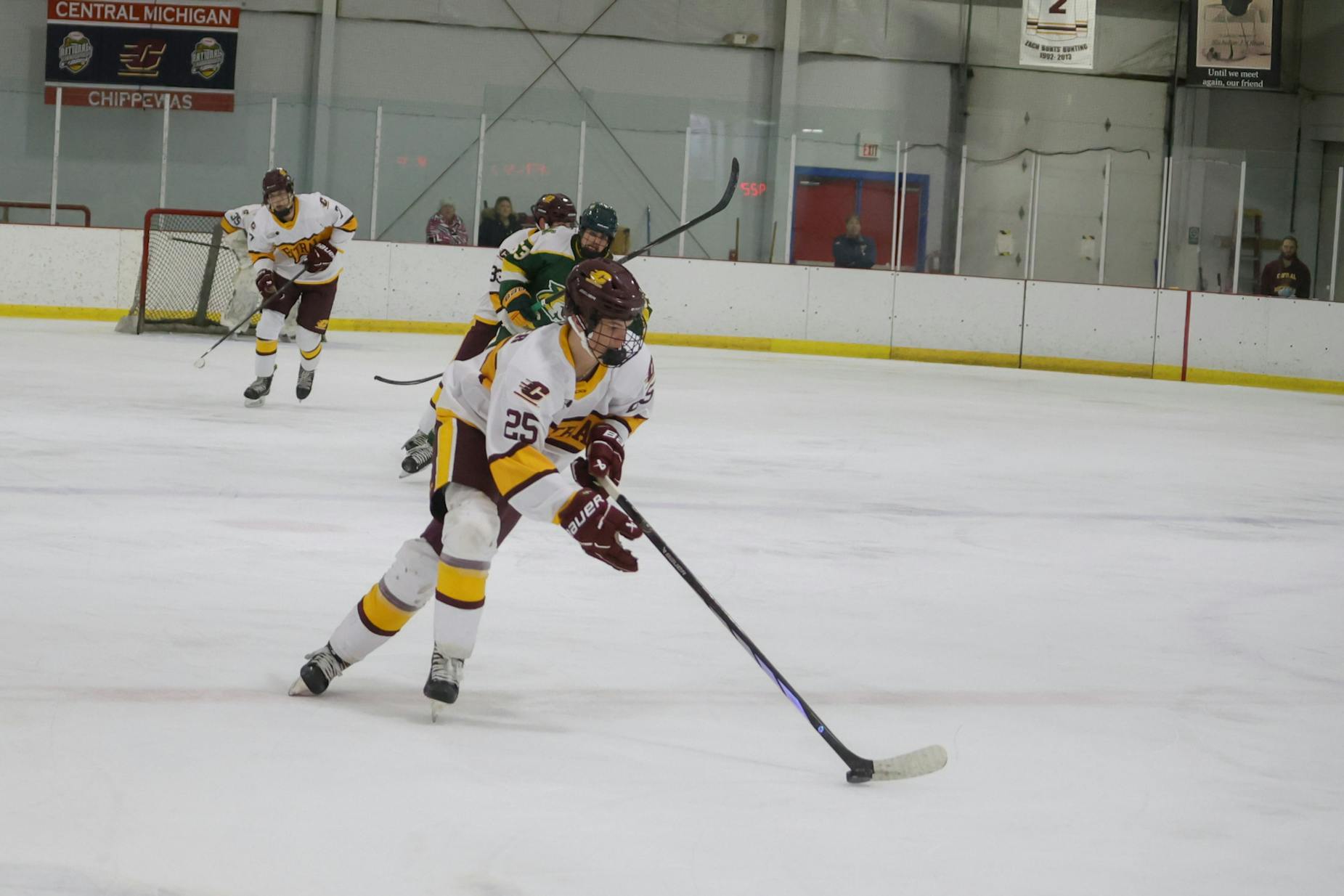
Central Michigan University freshman forward Drake Fletemier races towards the end of the rink, getting the puck closer to the goal at Martin Ice Arena, Friday, Nov. 7, 2025. Fletemier attempted no shots in the game against Northern. (CM Life | Jasmine Brookins)
Covering the Expenses
After the bulk of the fundraising is completed, it becomes vital for the club hockey program to keep track of how they’re moving their funds. Some of their most significant funds come in the form of renting ice and covering travel costs, which combined total around $70,000.
All of CMU’s club hockey programs play home games off campus at Martin Ice Arena, where renting an hour of ice costs $240 alone. For the team to prepare for games properly, they require 70-80 one-hour practices per year, with three practices per week, and each game requires three hours of time for ice rental.
In addition to renting ice, the team must factor in additional costs for playing as ACHA Division I members. They have seen an increase in costs after their promotion up from DII, including changes in registration fees and referee paychecks.
“With $600 for the refs, each game is essentially $1,300, and our tickets don’t cover that,” Reamer said.
During away games, the team must cover costs for transportation, which vary based on trip length.
“We’ll typically rent vans through either Krapohl Ford Enterprise or even used U-Hauls for equipment vans,” Joyce said. “Typically, those come out to $700 when we travel; however, on our longer trips that can be more expensive, like for our upcoming game in Kalamazoo, our bus trip is just under $2,000.”
In terms of equipment, players are required to purchase their own gear, including essentials such as helmets, padding, skates, sticks and other essentials. However, the team has worked with local vendors to provide discounts for certain pieces of equipment.
Team staff, apart from coaches and long-term members who receive paychecks, are primarily volunteers. The team also sets aside a certain budget for those who seek recruits, which includes costs for travel and hotel rooms. Each recruiting class yields 8-12 new players, who join after these recruiting trips or via a contact form on the team website.
Transitioning to the ACHA’s Division I contributed to the level of talent the team can bring in.
“There (are) a lot of guys that it does mean a lot to say, ‘I play Division I, not Division II,'” Niermeyer said. “The quality of player that we are able to bring in now, just with the DI stamp on the program, it was definitely noticeable.”
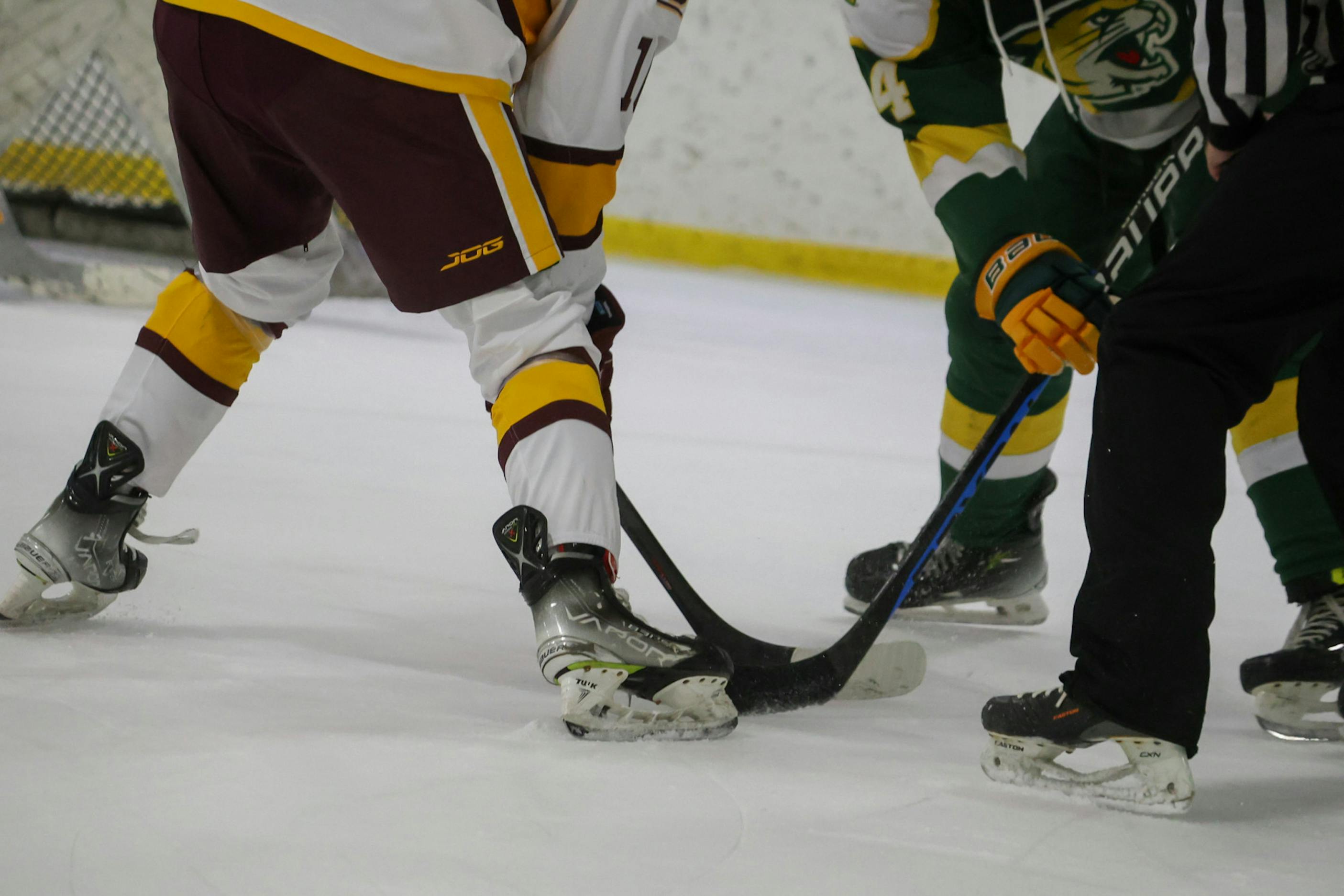
The Central Michigan University D1 Men’s Hockey Team hosts Northern Michigan University for game one at Martin Ice Arena, Friday, Nov. 7, 2025. (CM Life | Jasmine Brookins)
Current and future impact
The passion of the e-board members to create a program for fans, players, and families to become involved is clear. Even when focused on classes, they work each day to hold e-board meetings and find opportunities to benefit the team.
“Definitely can feel like you’re drowning, but then it’s rewarding on the back end,” Joyce said. “Somebody’s gotta step up and do it, but you’re helping the team run, and it’s the reason I get to play.”
With the move up to Division I in the ACHA, they’ve realized it’s crucial to utilize the work of others in the community and around campus to make it not only a successful club hockey program but also a chance for students to build their portfolios.
“We can give something of value to them, and that’s the most rewarding thing ever,” Niermeyer said. “That’s what keeps driving me, being able to give people pieces for their resumes. … It’s so cool that we’re now becoming big enough that people want to volunteer their time for us.”
This increased level of production allows the program to compete with others in their conference, which has been another goal for the e-board.
“Some really big teams out there that have really good production, and I would like to get closer to that,” Niermeyer said. “I know that [CMU’s] BCA and journalism departments are really good, and so we’d like to utilize them more.”
This ultimately is the mission for the e-board when managing their club hockey program: to create a system for the CMU community to become involved in some way, establishing a polished system for individuals to grow while remaining centered on this well-loved sport.


