Local property dispute heads to Supreme Court
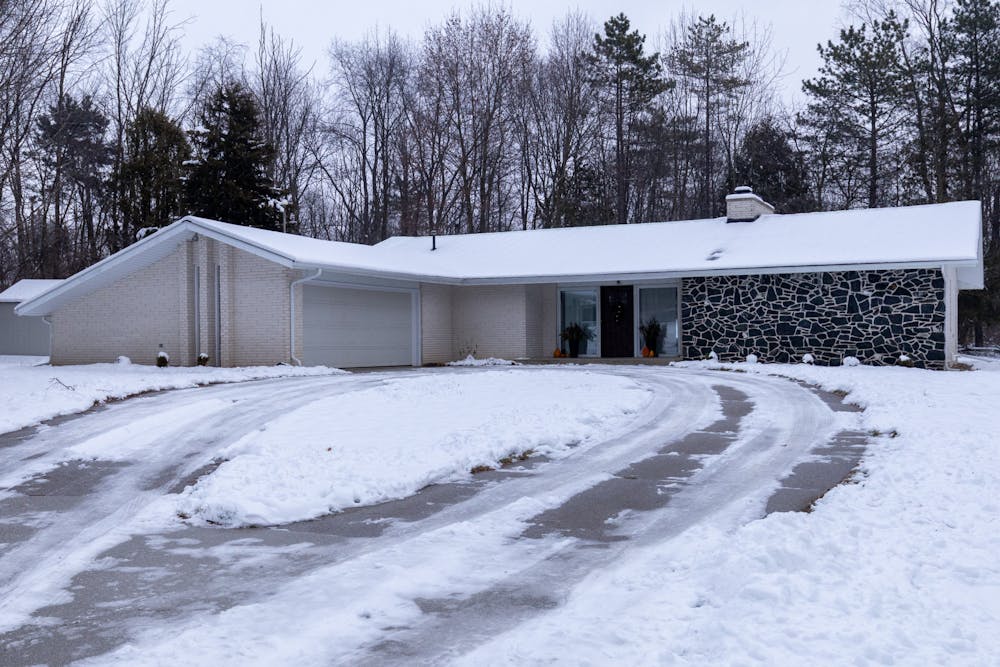
A house sits in the snow at 3176 Andrews Drive, in Mount Pleasant, on Wednesday, Nov. 3, 2025. The building is currently in the midst of a house dispute involving the Supreme Court. (CM-Life | Mark Hoover)
A former Isabella County homeowner is suing the county over a foreclosure that he says violated his family's Fifth and Eighth Amendment rights. Now, it's up to the U.S. Supreme Court to decide whether Marc Pung was excessively penalized when the county seized his property and sold it in a foreclosure auction.
The Supreme Court is scheduled to discuss the Michael Pung v. Isabella County case on Feb. 25, 2026. The plaintiff, Michael Pung, is claiming that a property was repossessed and the sale took place because of taxes that were unpaid, but not owed. The court will determine whether the county violated homeowner Marc Pung's Fifth or Eighth Amendment rights.
Michael Pung, the named plaintiff and executor of the estate, is Marc Pung's uncle and the brother of the late Timothy Scott Pung, who first purchased the property in question on St. Andrews Drive.


When Timothy Scott Pung bought the home in Union Township for $125,000, he claimed Principal Residence Exemption (PRE). The exemption allows Michigan property owners to opt out of certain property taxes if they live there.
His son, Marc Pung, was a partial owner and resident of the property in 2008, when the dispute began.
During the 2007 to 2011 tax years, Patricia DePriest, the Union Township Tax Assessor, denied the PRE credit for the property. This is according to the court documents written by Pung's attorney Philip Lee Ellison.
According to the court filing, DePriest revoked the PRE -- commonly known as a homestead exemption. She allegedly denied the exemption because there was no new affidavit of Timothy Scott Pung’s heirs on file.
“This led to a $2,241.93 unpaid tax bill for a tax that was never actually owed,” according to the petition.
The Pung family refused to pay the additional tax and claimed that the estate was entitled to the exemption. The county, meanwhile, filed a lien against the parcel to start the foreclosure process. Michael Pung took the issue to the Michigan Tax Tribunal.
The tribunal ordered the PRE credit to be fully restored because Marc Pung was a part-owner of the estate. The ruling found Marc Pung was not a new owner and did not need to file a new affidavit.
“Michigan courts ultimately authorized the foreclosure over Pung’s strenuous objections and challenges, because DePriest failed to provide timely notice of the 2012 revocation and Michigan’s various tribunals found themselves powerless to fix the error," according to the petition.
Isabella County initiated foreclosure of the property because of the unpaid-but-not-owed tax bill. The house sold at auction for $76,008, according to the lawsuit.
“From Isabella County’s own annual property valuation determination, the Pung property was worth $194,400 at the time of foreclosure," the petition read.
The lawsuit alleges violations of the Fifth Amendment for unconstitutionally seizing the property without compensation or the Eighth Amendment for unconstitutionally giving an excessive fine.
A public relations representative for the county did not return calls for comment. Isabella County Commissioner Frank Engler noted that the case has been through the state appellate process and is now slated to be heard by the High Court.
"It has been through the process, and so far they've been citing the county's position about what the value is," he said. "Then you have to determine who owns the land if it goes into bankruptcy.
"I'm a farmer, and I always said, 'We've had our property since 1880. We don't own it, we just lease it from the government because we don't pay our (exempted) taxes.'"
The Pung family alleges about $118,000 loss in equity from the sale and levied-but-unowed taxes. They claim the land was taken without just compensation.
Isabella County, in its response, claimed that the foreclosure and tax auction already happened. The foreclosure collects the unpaid PRE tax, and the foreclosure sale does not equal what the former owner believes the property was worth.
The county's argument claims that: "The fair-market-value theory would require the government to pay out more than it receives at auction, benefitting delinquent taxpayers to the detriment of their fellow citizens who pay their taxes on time."
Ellison said the Supreme Court is expected to hear oral arguments in February or March.


