'No native kid is ever going to cross that threshold again'
SCIT presents boarding school renovations to the city officials
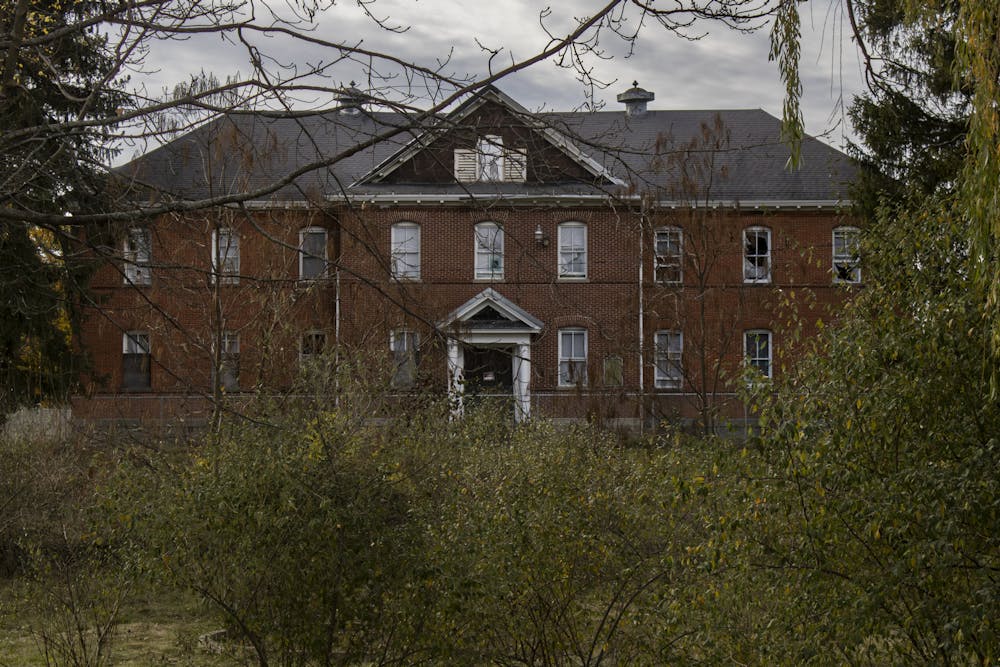
A boarded-up schoolhouse on the campus of the Mount Pleasant Indian Industrial Boarding School. The site is currently closed to the public, with "No Trespassing" signs stationed around the property. (CM Life | Blace Carpenter)
The Saginaw Chippewa Indian Tribe is moving forward with renovation plans for the Mount Pleasant Indian Industrial Boarding School property. The Tribe presented renovation plans during a city commission meeting on March 9.
Renovations to the old school buildings and plans have been ongoing for the past five years. Three of the seven buildings on the property are in the process of restoration.
The Tribe also decided against demolishing any of the buildings.


The purpose of restoring these historic buildings is to begin the process of healing, remembering and providing a sanctuary for Native culture according to Architect Christian Nakarado.
"We want to make these buildings safe, and we want to stabilize these buildings, but we don't want to sanitize these buildings," said Nakarado. "We wanted to reflect the reality of what happened there, and putting a fresh coat of paint can be a way to cover that thing up."
The current design ideas are schematic, meaning they are not ready for development but serve as a guideline for the future.
Right now, three of the buildings have gone through a "mothballing" process of restoration to help preserve the buildings. They are also being cleaned for mold and asbestos according to SCIT.
"We want to have a dream to shoot for, and we want that dream for the tribe, and for all the people who are affected by this place," said Nakardo.
Renovation plans for the Mount Pleasant Indian Industrial Boarding School campus (Courtesy of Christian Nakarado)
There are three buildings that are the current focus of restoration. They include the workshop, gymnasium/auditorium and classroom. The workshop is the smallest building of the three and will be renovated first.
Tribal Historic Preservation Officer and Chairwoman of the MIIBS Committee Marcella (Summer Moon) Hadden said that one plan for the property was to add a memorial or sacred garden for the children who attended the school.
Hadden said current research has found that the resting places of 227 boarding school students are unknown.
The research is not done; this is just where it stops now said Hadden.
The boarding school opened on Jan. 3, 1893, and operated until June 6, 1934. The school sits on 320 acres of land, while SCIT owns just under 15 acres of the land.
Nakardo said one of the objectives for these buildings is to let the silence speak for itself. Many of the renovations include accessible entrances and creating a community space. The workshop building has plans to include office spaces and a classroom for learning the native Anishinaabe language.
The plan is also to focus attention on the land, rather than inside the walls of the school. This is a step closer to breaking down the barrier that native children resided in for 40 years during the school's operation, said Nakardo.
The classroom building renovation plans included permanently closing the main building's front doors.
"The eastern door, that was the threshold that so many students would have passed through in their first days at the school, and we'd like to close it forever," said Nakarado. "With the message that no native kid is ever going to cross that threshold again."
The new entry will be in the basement of the existing building. Children attending the school would sneak down into the basements and speak their native language, along with practicing ceremonies.
The classroom building renovations will also include roof renovations. One idea is to create a wigwam-shaped wooden frame covered in glass shingles. This will reflect Anishinaabe architecture, while focusing attention outside.
The gymnasium and auditorium building changes will be minimal, as the current plan is to leave the space open, with some additional community spaces. Renovation plans include making this space more accessible and code compliant.


