High costs, hard choices
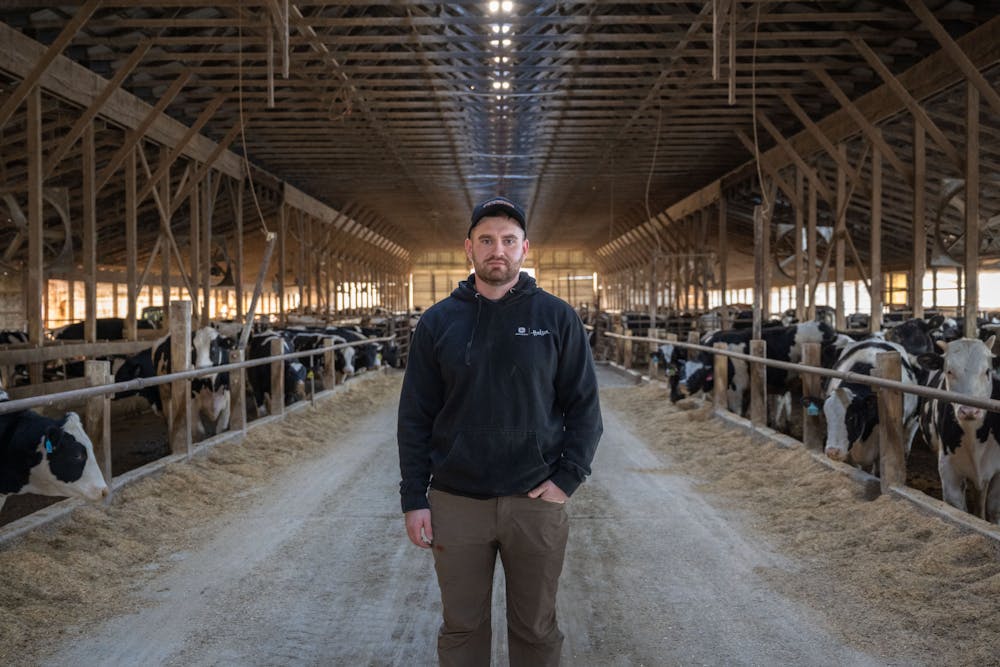
Josh Neyer poses inside of his cow farm in Mount Pleasant, Michigan on March 23, 2026. He explains that there are about 500 cows inside that barn alone. (CM-Life | Claire Vachon)
As Mount Pleasant farmers prepare to plant their spring crops, they face some of the highest input costs seen throughout their careers. One of these farmers is David Zeien, owner of Zeien Farms Inc.
“My dad always said it’s a seven-year cycle. There’ll be seven good years followed by seven bad years,” Zeien said. “But sometimes I don’t believe the seven good years ever stay long. Feels like the bad years are outnumbering them once in a while.”
Weather permitting, Zeien will join local farmers in late April to early May to plant corn and soybeans on his 1,200 acres of land. He said his input costs are skyrocketing, especially since the war in Iran. Specifically, the cost of fertilizer.


According to the Council on Foreign Relations, the Middle East’s role in globally exporting fertilizer contributes to the spike in its cost. Zeien said if he can’t buy enough fertilizer to plant corn, he’ll need to switch to a crop that requires less.
“I can't think of anything that's less expensive today than it has been in the past. Nothing,” owner of McDonald Farms, Mark McDonald said. “All of those costs are higher, and some of them exponentially higher.”
During the spring, McDonald will work 12 to 14-hour days to plant crops on his 9,500 acres of land. In his 46-year career, today’s costs are the highest he’s ever seen. He said his biggest expenses are seed, fertilizer and herbicide.
“In some years, you have really good luck,” McDonald said. “In other years, it’s a struggle.”
Until it’s time to plant for spring, McDonald and Zeien will prepare by calibrating and adjusting their equipment for efficiency. They’ve also noticed an increase in the cost of fuel.
“There isn’t a pricing problem for farmers nowadays,” owner of Neyer Farms Inc. and Custom Harvesting, Josh Neyer said. “It’s more of a cost problem.”
This year, Neyer will plant corn and possibly hay to feed the cattle he raises. He said since the cost to grow corn increased more than the price it’s sold for, profits this year will be a lot tighter for most farmers.
“You don't want to work all year long to actually lose money or break even,” Zeien said. “There's hopefully going to be a little profit there.”
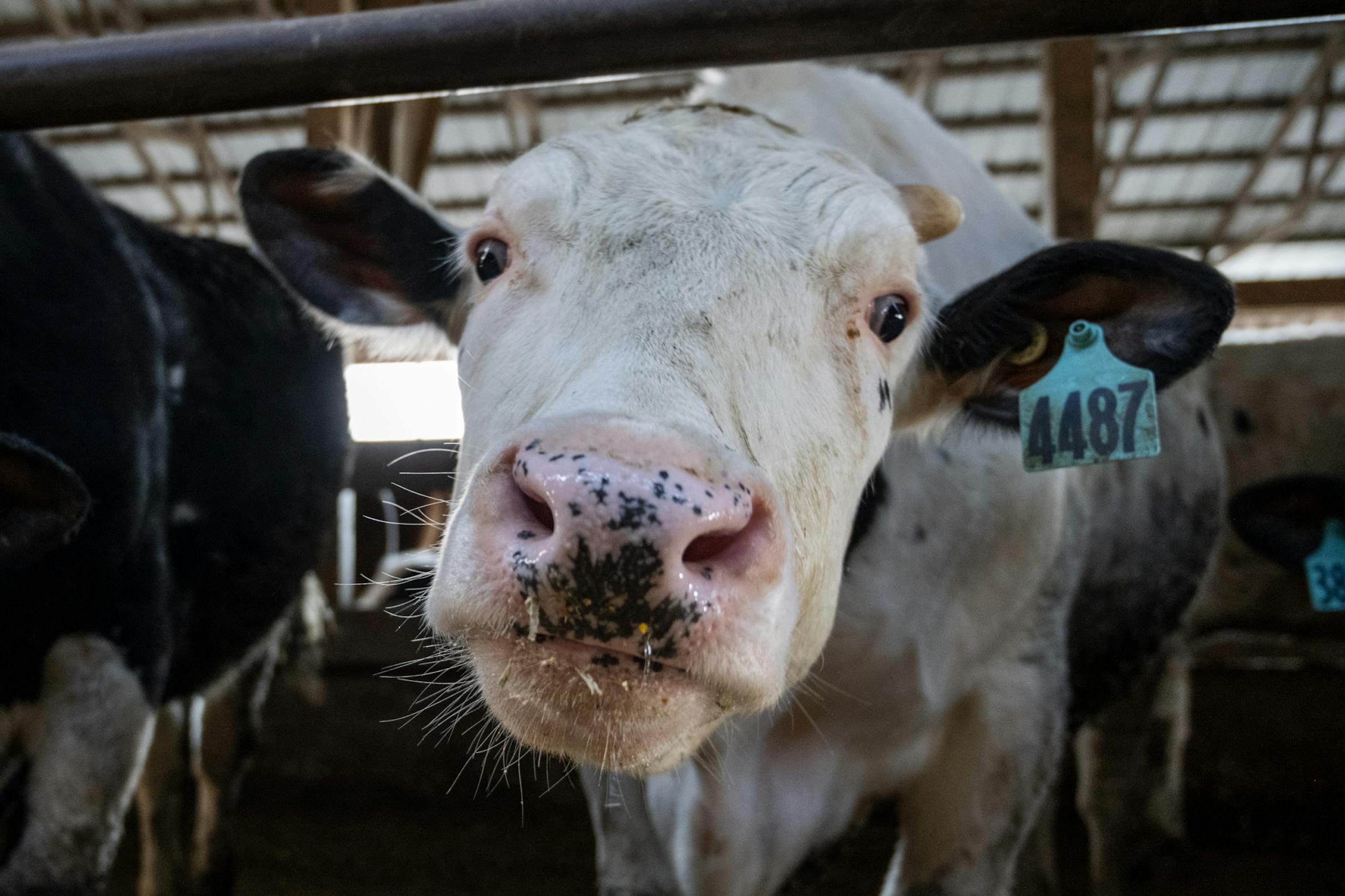
A cow inside of Josh Neyer's cow farm in Mount Pleasant, Michigan pokes its head through a fence and looks at the camera on March 23, 2026. (CM-Life | Claire Vachon)
Adam Gallaher, an assistant professor in the Geography and Environmental Studies department, said it's more expensive for a farmer to farm the same acreage of land today compared to 10 years ago.
Neyer said from start to finish, it costs about $800 to farm one acre of corn.
“Things are probably tighter than they’ve ever been right now,” Neyer said. “The only way anybody can survive still doing it is you have to be really, really good at what you do, extremely efficient, or you have to be extremely diverse and have kind of a niche market that not everyone else does.”
In addition to his baseline farming expenses, Neyer also put in a $70,000 water storage runoff pit to reduce contamination in the Chippewa River from their site. The Nature Conservancy helped him fund its installation this year.
First-generation farmer and owner of Mid Mitten Sustainable Farm LLC, Todd Geurink, said that because of their expenses, farmers often need to cut back and live a simpler lifestyle than in other careers. With smaller profits and larger amounts of time and cost put in, he said, it can be difficult for farmers to stick with it.
“It's pretty much all or nothing, and you have to continue forward if you want to stay in farming or stop,” McDonald said.
Gallaher said that in the last 30 years, a lot of small family farms have started disappearing. Because of increasing costs or no lineage to take over ownership, farmers end up selling or leasing their land out to other farmers, he said. According to the American Farm Bureau Federation, the number of farm operations has decreased by 7%.
For generational farmers like Zeien and Neyer, farming is in their blood.
“You just take a lot of pride knowing that you’re your own boss and that you can basically control your destiny a bit,” Zeien said. “It also comes with a little bit of hard work, but then there’s times where you don’t have to work quite so hard, and you can enjoy life a little bit too.”
McDonald continues to farm for legacy and hopes that the future will be brighter. He said that for him, farming is a way of life.
“It just takes a couple good days to really remember why you do it,” Neyer said.


