Board of Trustees approves tuition rates, budget
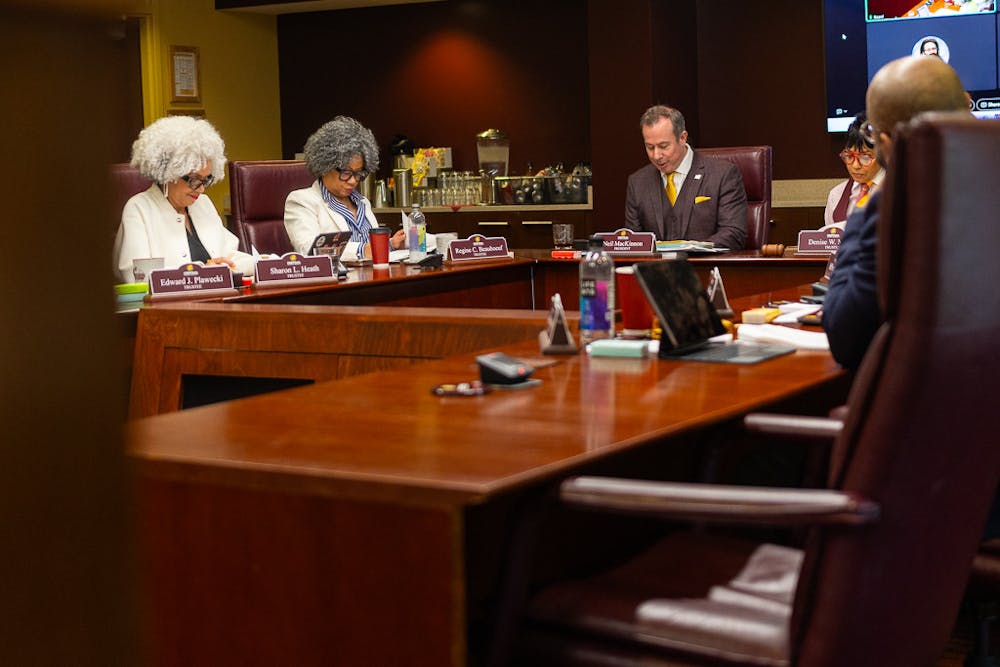
Central Michigan University President Neil MacKinnon gives his report during the Board of Trustees Meeting held in Bovee University Center on Thursday, April 23, 2026. (CM-Life | Cristin Coppess)
Central Michigan University’s Board of Trustees approved the increased tuition rates for the 2026-27 academic year at its meeting on Thursday, June 25.
A lower-level undergraduate tuition rate is now $519 per credit hour (a $20 increase). An upper-level undergraduate tuition rate is now $575 per credit hour (a $23 increase).
The graduate tuition rate increased by $33. It’s $862 per credit hour for master’s students, and $962 per credit hour for doctoral students.
President Neil MacKinnon said CMU continues to offer one of the state's lowest undergraduate tuition rates and a competitive graduate tuition rate. According to the Michigan Association of State Universities report, CMU is placed 13th out of 15 universities for undergraduate tuition.
“As we continue to offer students the highest quality academic and student support programs, we've also seen significant increases in the cost of our operations,” MacKinnon said. “External pressures, such as rising insurance costs and uncertainty about public funding, have made it necessary to raise tuition rates for the 2026-27 academic year.
“We do not make these decisions lightly. We know that the cost of higher education is a major concern nationwide, and that for many families, the sticker price of college can appear daunting; however, the true cost of attendance is often much lower.”
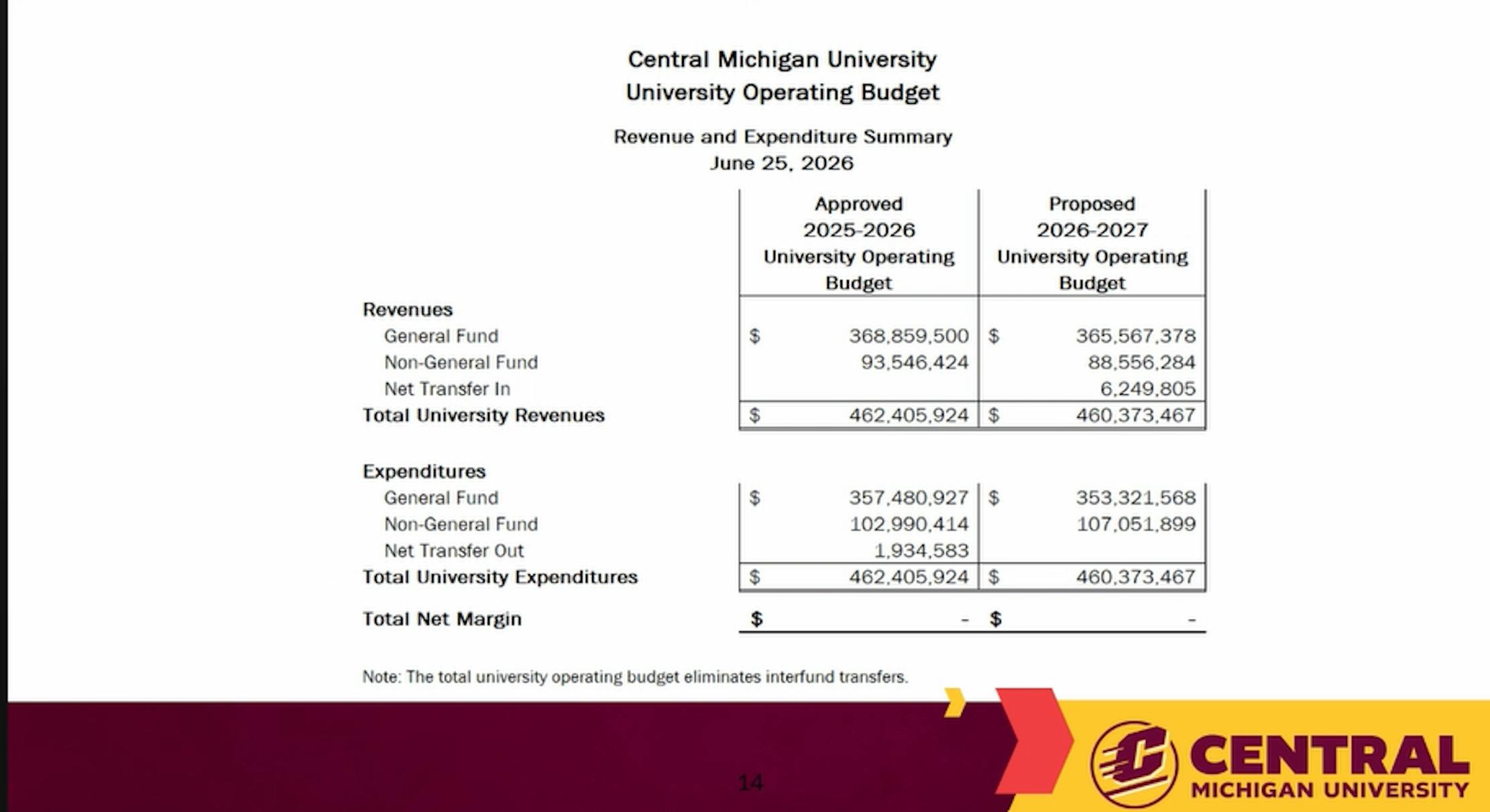
The Board also approved the 2026-27 operating budget.
The expenditures decreased by $2 million from last year, with a projected total of about $460 million.
Vice President Mary Hill said the budget was put in place with some assumptions, such as that the entering freshman class will be of a similar size, a decrease in credit hours taken and a $2.6 million increase for state appropriations.
MacKinnon said CMU wants to continue providing fair compensation to its faculty and staff. He also noted that he and some other senior officers removed their scheduled salary increases this year.
“We understand that budget reductions pose challenges for our faculty and staff, and as leaders of this organization, we want to demonstrate our commitment to alleviating some of the pressure,” he said.
Some other resolutions that the Board approved were:
- Establishing the Bachelor of Applied Science degree.
- Naming MyMichigan Health CMU Medical Education Building.
- Construction of MyMichigan Health CMU Medical Education Building for the Covenant HealthCare College of Medicine at Central Michigan University in Saginaw. All Board members supported the resolution, except for Trustee Edward Plawecki.
- Demolition of Smith Hall.
- Refurbishing of Terminal Park Infrastructure, which are tunnels that provide all utilities to the north side of campus.
The Board previously discussed these projects at its committee meetings Wednesday.
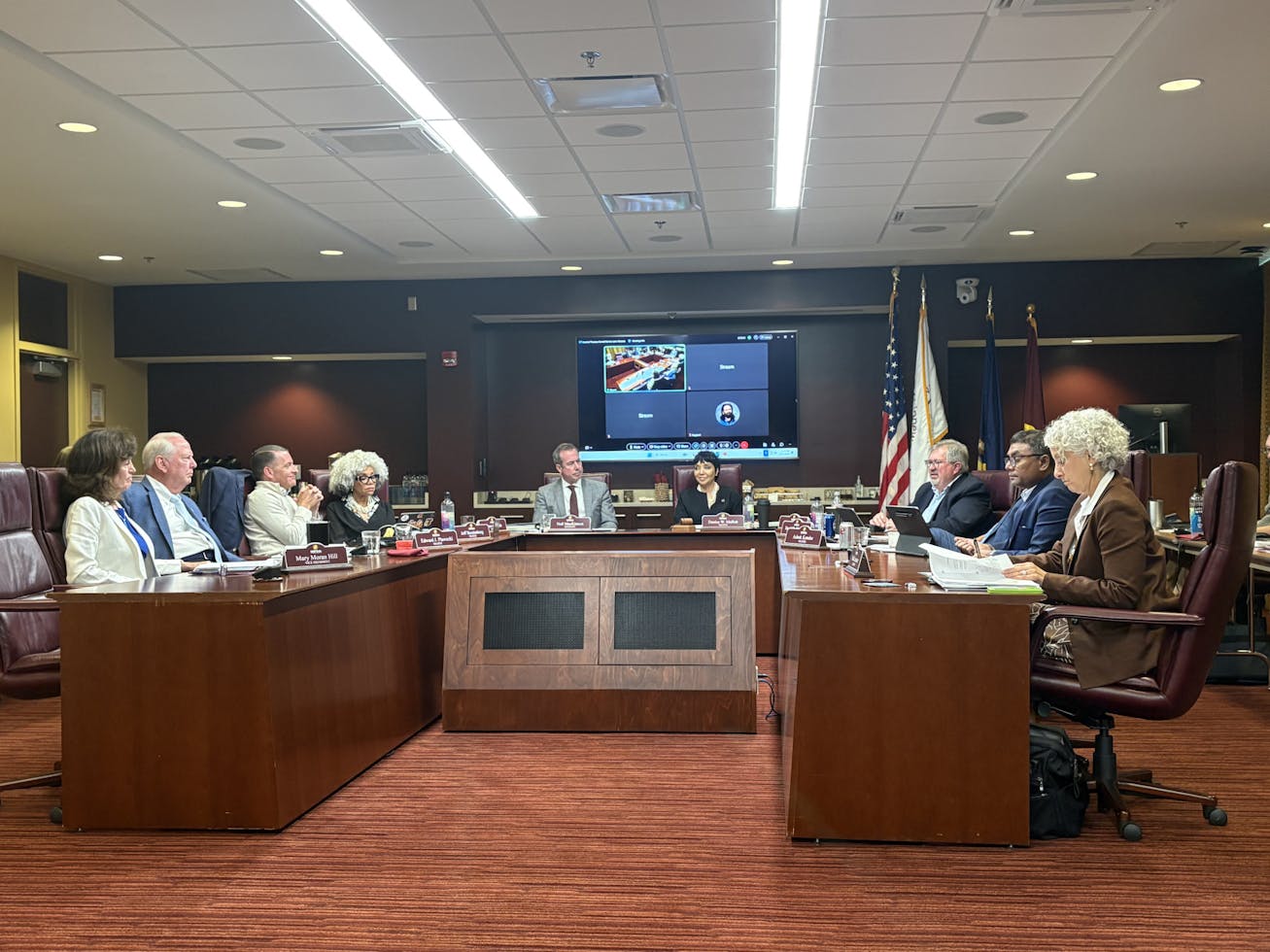
Several trustees recognized that the Covenant HealthCare College of Medicine at CMU project went through a long process. Central Michigan Life previously reported that CMU plans to move its College of Medicine to Saginaw by 2028 to provide more opportunities for its medical students.
MacKinnon also said that while the budget reflects lower revenues and expenditures, investing in the university’s strengths is important for it to stay competitive over the long term.
“CMU is financially strong and stable, it's because we operate within the scope of our budget,” MacKinnon said. “When revenues go down, we make appropriate reductions to our expenditures to maintain a balanced budget. At the same time, we cannot cut our way to higher enrollment and growth.
“While we have made difficult decisions to reduce expenses, we have also made strategic investments in key areas, including student support and infrastructure, to remain competitive and to ensure that we are offering our students an incredible educational experience.”
In other news:
- This spring, CMU had 2,468 graduates at five commencement ceremonies, MacKinnon said.
- The Board removed the motion to approve the construction of the Welcome Center from Thursday’s agenda.
- MacKinnon announced that CMU will launch new academic programs this fall. Some of them are a digital strategy minor, a cyber security minor, an applied world languages and cultures major and a master's degree in early childhood leadership.
- MacKinnon also said CMU awarded $247,875 in Go Grants this year. There were also $151,000 in “Keep Going Grants.” One of these grants funded the COMPASS program, which stands for Community Outreach by students to support Mental Health, Persistence and Student Success. CMU alumnus Bob Oros and his wife Lisa gifted $650,000 to support the program.


