Finding the right fit in therapy

Central Michigan junior Treyven Salas-Peters colors with a gel pen during the Mindful Moments: Asian Crafts event in the Bovee CSID, Wednesday, April 9, 2025. The pictures for coloring were provided along with many different utensils by Counselor Elizabeth Husbands from the CMU Counseling Center. (CMLife | Alivia Cranick)
In the past year, 12% of 18 to 25 year old's reported having suicidal thoughts, according to the National Alliance on Mental Illness (NAMI). During September, NAMI uses Suicide Prevention Month to remind people that talking about suicide isn't harmful; staying silent is.
Students can also access support that best fits their needs with mental health services on and off campus. Local therapists and Central Michigan University’s resources offer different options to provide people with the right care for them.
“Students shouldn't feel obligated to keep going [to a therapist] just because they feel like they are stuck with someone," Campfire Therapy owner and sole counselor Kevin Daum said. "Sometimes it takes a while to find the right fit."


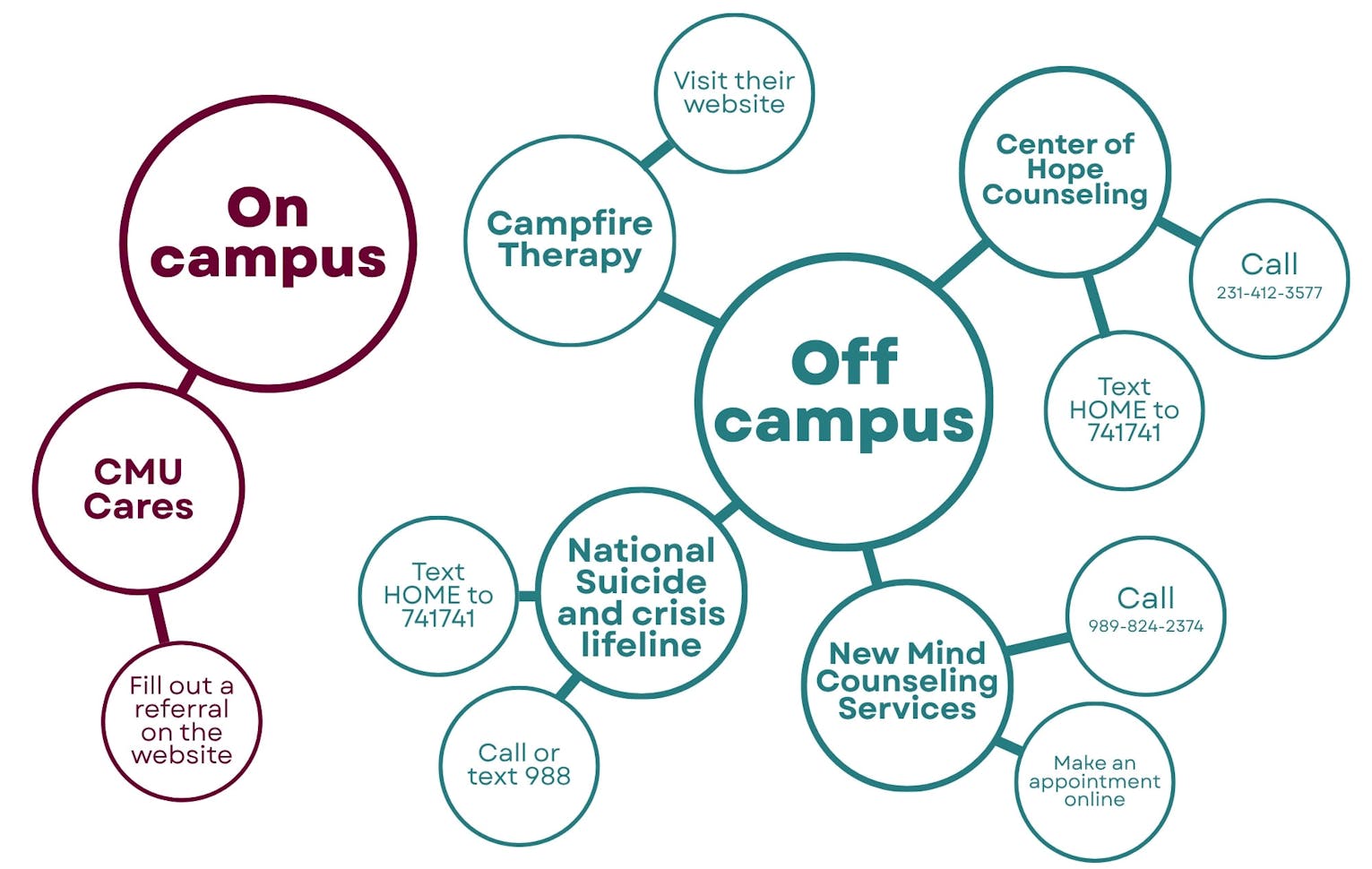
Off campus options
The owner of Center of Hope Counseling, Lisa Carpenter, said she wants clients to feel comfortable as soon as they walk through the door.
Her practice specializes in eating disorders and body image issues. They recently hired a male therapist who specializes in men’s emotional health and helping college athletes transition to other career paths after graduating. It also treats for:
- Anxiety
- Depression
- Trauma
- Helping students navigate or adjust to college
Center of Hope Counseling offers telehealth appointments and is in the process of adding more office spaces and a group room. Carpenter said its goal is to provide groups for college students on different topics.
“Our mission is just to help as many people as we can and to provide evidence-based, good quality care to our clients,” Carpenter said. "And I mean, honestly, we're a pretty cool group of clinicians."
Its best clinician, she said, is their cat Sigmund Freud. He's always in the office and is a natural emotional support animal.
“He's a very great asset to our staff,” she said.
Carpenter encourages anyone who’s apprehensive to start therapy to "just try it," because they have nothing to lose.
“Counseling can be fun too,” she said. “A lot of our clinicians here are fun, so we bring that into the session. It doesn't have to be all gloom and doom when you come into counseling. You can have fun with it.”
Kelley Raab-Butler, the owner of New Mind Counseling Services, said it offers free 15 minute meet and greet appointments for clients to explore if the match is a good fit.
Some examples of what it can help students with are:
- Time management and organizational skills
- Anxiety
- Substance abuse
- Depression
- Relationships
- Trauma
- Motivation
- Anger
- Healthy habits
“I think we're a pretty friendly office,” Raab-Butler said. “We're located right downtown and if anybody has just any general questions, like about therapy and what to expect, they can always call and talk to me.”
She said students can do a combination of telehealth and in-person sessions.
“We try to help them find that balance, so they're not so stressed out all the time, and learn those stress management skills, because when you can decrease your stress, your anxiety and depression isn’t always as high,” Raab-Butler said.
Along with talk therapy, Daum at Campfire Therapy is certified in Eye Movement Desensitization and Reprocessing (EMDR) therapy. He said EMDR is a memory focused approach that can help with both single incident or accumulative trauma that people are either aware or unaware of.
“If you can see any connection between the trouble that you're having right now and experiences you've had in the past, then EMDR will be a good fit for that,” he said.
Campfire Therapy also specializes in trauma, post traumatic stress disorders and career counseling.
On campus options
Both Center of Hope Counseling and New Mind Counseling Services work closely with CMU’s Counseling Center, which offers 24/7 resources for students in crisis.
The center and CMU Cares, the university’s comprehensive support group, can also work with students to find them the mental health care they need. Anyone can fill out a referral for themselves, or another student or faculty member they are concerned about. The team will reach out to people referred and offer them help with finding the right support.


