Voting at school? Here's a how-to for students
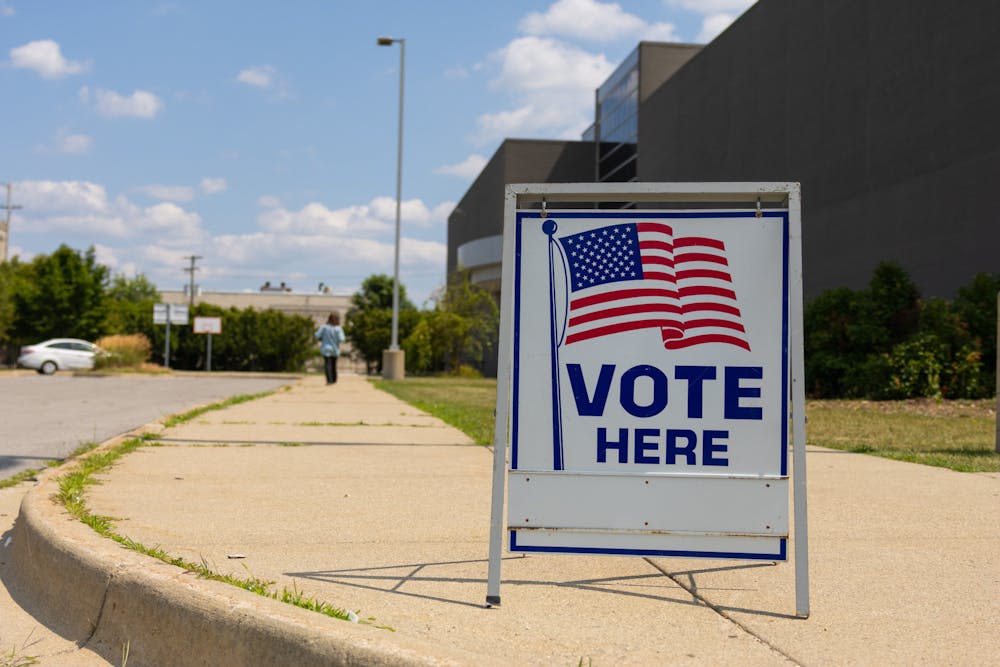
This November, Michiganders will be hitting the polls to cast their ballots for the Michigan general election.
The offices holding ballots in Michigan are United States Senate, United States House, Governor, State Senate, State House, special state legislative, State Supreme Court, intermediate appellate courts, school boards, municipal government, recalls, ballot measures and local ballot measures.
The U.S. senate is a key election, with Abdul El-Sayed, the Democratic candidate and Republican Mike Rogers on the ballot.
El-Sayed won against Democrat Haley Stevens in the August Primary, in a heated race.
According to a news story by WCMU, El-Sayed's win represents a significant shift in the Democratic Party, as he's a more progressive candidate.
The U.S. House of Representatives spot will provide voters with the opportunity to elect 13 candidates to serve in the House from each one of the 13 districts.
The primary election in August finalized the ballots for voters, with key highlights:
- Jocelyn Benson was chosen as the Democratic governor nominee
- El-Sayed won against Stevens for U.S. Senate Democrat nominee
- John James became the GOP's gubernatorial pick
Michigan for youth voter turnout ranks third in the country, according to a press release from the state. A study from Tufts University states that right under half of the youth voted in 2024 for the presidential election.
The youth counted in the statistics include ages 18 to 29, that are eligible to vote in the United States.
As college students across the state vote in November, their votes represent a large demographic of voters in Michigan.
On Central Michigan University’s campus, there are various resources students can turn to in order to get information on voting.
Central Votes is a resource for students, to help them become engaged citizens, according to the CMU website.
"Now, obviously we're in election year, so that's where our energy is going in a direction to try and get all of our kids engaged," Norma Bailey, the co-chair of Central Votes, said.
She said the Central Votes Coalition has a 10 Tuesdays campaign to get students involved with voting in elections, by providing students with resources from different organizations on campus.
"We try every avenue we can to get students engaged by finding out the information," Bailey said.
After the 2024 election, Central Michigan has been named a voter-friendly campus by Campus Vote Project and the National Association of Student Personnel Administrators. According to a press release from CMU, the mission is to bolster colleges and universities to help students overcome barriers to participating in the political process every year.
"Our voting rate hit CMU in 2014 was only 16%, by 2018 we had more than doubled it to 34.9% and in 2022, we had increased it again to 45.6%," Bailey said, about the election information according to Tufts.
CMU hosts a polling place on campus and early voting begins in Mount Pleasant up to nine days early. According to the Central Civics website, the early voting is located in Powers 136 and starts on October 24.
Voters looking to get registered for the November election must register 14 days in advance, be a U.S. citizen, be at least 17.5 years old and turn 18 before Election Day and have lived in their voting city for 30 days.
Michiganders can register to vote online, by mail or in person by visiting their local clerk's office.
If a Michigan voter prefers to submit their vote by an absentee ballot, they can request one starting 40 days before the election.
Voters can request their ballot through their local clerk office, unless they are on the permanent absentee ballot list. The application can be submitted online, through the mail and in person.
If a resident is already registered to vote at their current address, they are unable to request an absentee ballot on Election Day. The only exception is in the case of an emergency situation, in which the voter can apply for the ballot from their local clerk's office as late as 4 p.m. on the Election Day, according to the Michigan Department of State.
Michiganders can learn more about what's specific on their specific ballot online at Michigan Voter Information Center, in which it will show a sample ballot for each precinct.
The state website on voting offers residents with do's and don'ts for polling places.
- Don't wear campaign clothing or accessories in or 100 feet of the polling place
- Do bring an interpreter if needed to vote in any language other than English
- Don't bring election or campaign flyers in or up to 100 feet of the polling place
- Do take pictures outside of the voting area, but don't take photos inside the voting area
According to Michigan laws, voters are not required to possess a photo identification to vote, but voters that do possess a photo ID must present it at the polls. If the voter doesn't possess a photo ID, they can still vote by signing an affidavit, according to the Michigan Voter Guide.
Michigan’s general election will take place on Nov. 3.
"The elections are crucial and right now, your generation is the biggest voting block in the country and if all students would get out and vote, they could decide the direction of this country," Bailey said.


