Bidding farewell to Smith Hall
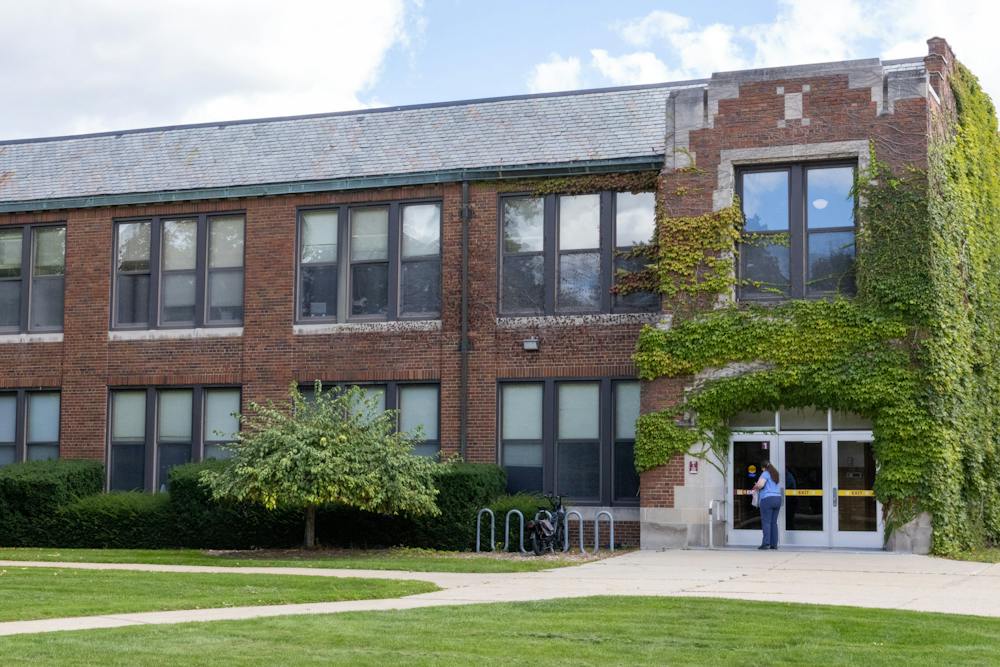
Smith Hall, an ivied brick building, stands in the historic North district, between Grawn Hall and Franklin Street, but its lifetime is running out.
In June 2026, the Central Michigan University Board of Trustees voted in favor of the demolition of Smith Hall. The decision was based on the university’s plan to be responsible with the buildings that currently exist and space available on campus.
"The cost of deferred maintenance on the building was the biggest factor in the decision," said Ari Harris, the executive director of strategic communications at CMU.


The demolition, which is expected to cost $2 million, will eliminate $2.8 million in deferred maintenance liability. Harris expects that the demolition will not take place until at least spring 2027.
There are currently nine offices housed in Smith Hall, and most of them were temporarily moved from Ronan Hall because of an ongoing renovation project on the building.
"We are currently working on relocating folks who are working in Smith Hall now -- many of whom will be moving into Ronan Hall when it is complete," Harris said. "Facilities Management and University Engineering and Planning teams are preparing the project so it will move forward efficiently once those prerequisite activities are complete."
There was a significant amount of planning that went into the demolition decision before the Board of Trustees voted on it. Harris said the cost to renovate compared to the cost to demolish was among the most important factors considered, as well as other needs the campus is facing.
As Smith Hall’s existence creeps to 90 years, the building has seen some decay. There are some spots on the walls with nails sticking out, and there is visible deterioration on the walls in other areas.
"The building has had many lives," said Bryan Whitledge, faculty member at Clarke Historical Library.
Built in 1934 as the College Elementary School, the building was used as an in-house school for teachers to train, teaching real students in real classrooms.
CMU, then called The Central State Teachers College, used to primarily train teachers, so it was crucial to have a school nearby for teachers who were still finishing their schooling themselves to practice and gain experience in a classroom.
"Smith Hall is tied to the basic mission of Central," said Dr. Richard Hayes, an interior design professor and architectural professional. "For the longest time, we were established as a normal school, so this is part of our heritage. That building represents what CMU did, where we got started."
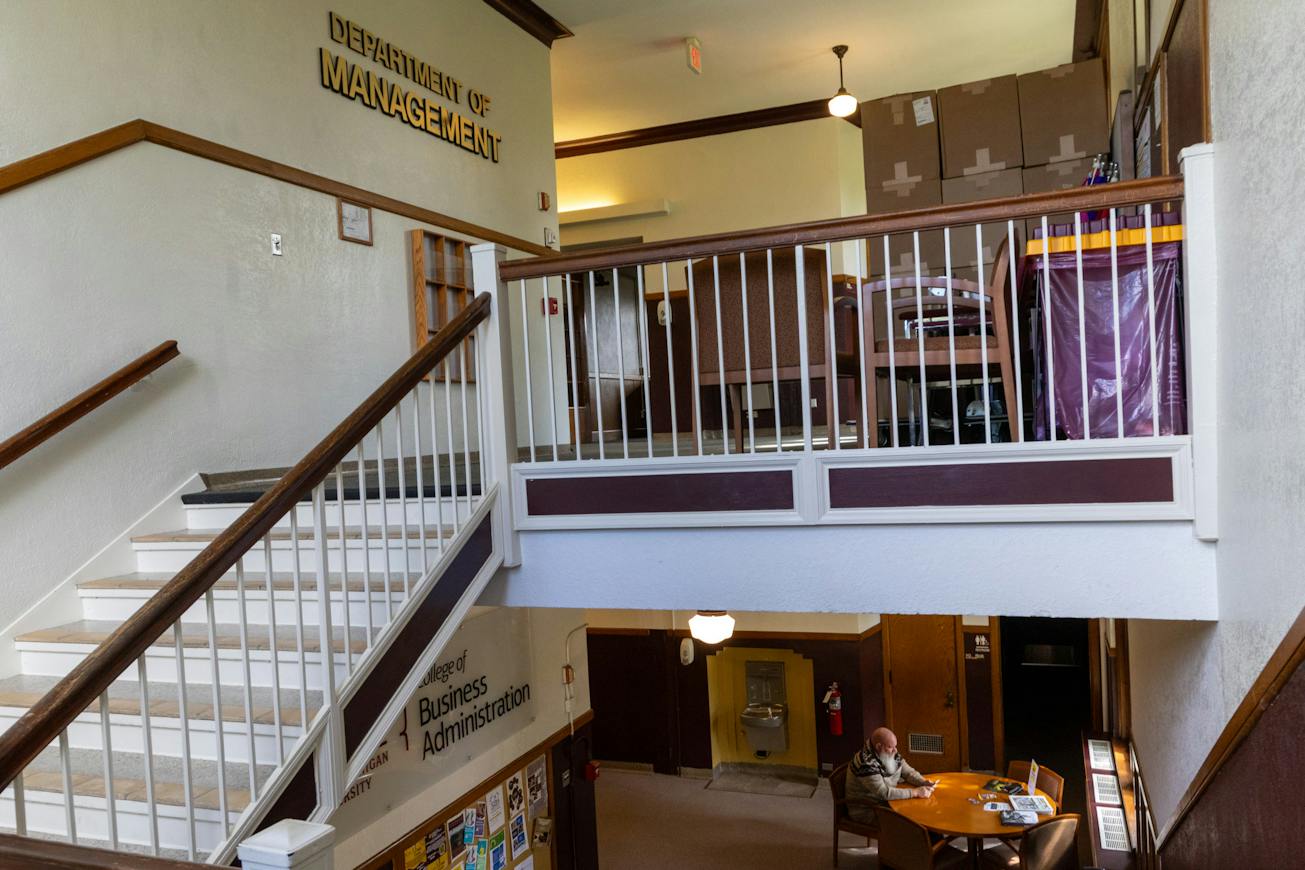
In the 1960s, the College Elementary School was known as North Hall, and it was used as a business administration building. In 1984, the building was renamed Smith Hall, for Woodward C. Smith, who served as Vice President of Public Services and spent 24 years as an instructor and in numerous other administrative roles at CMU.
“It represents the heritage of the school, and it is key to a traditional academic quadrangle with the buildings that are there," said Hayes. “It’s a great representation of collegiate gothic architecture. It has all the key features like arches and masonry."
Hayes, who is a CMU alum himself and has watched Smith Hall evolve through the years, is disappointed to see the building get demolished.
"I'm passionate about Smith Hall," Hayes said. "I think it's a mistake to tear it down." He believes Smith Hall could have been repurposed into a visitor center that is accessible to all guests.
Future developments on the site where Smith Hall currently resides are undetermined, Harris said, but there is likely to be a green space, leaving it available for other projects in the future.


